
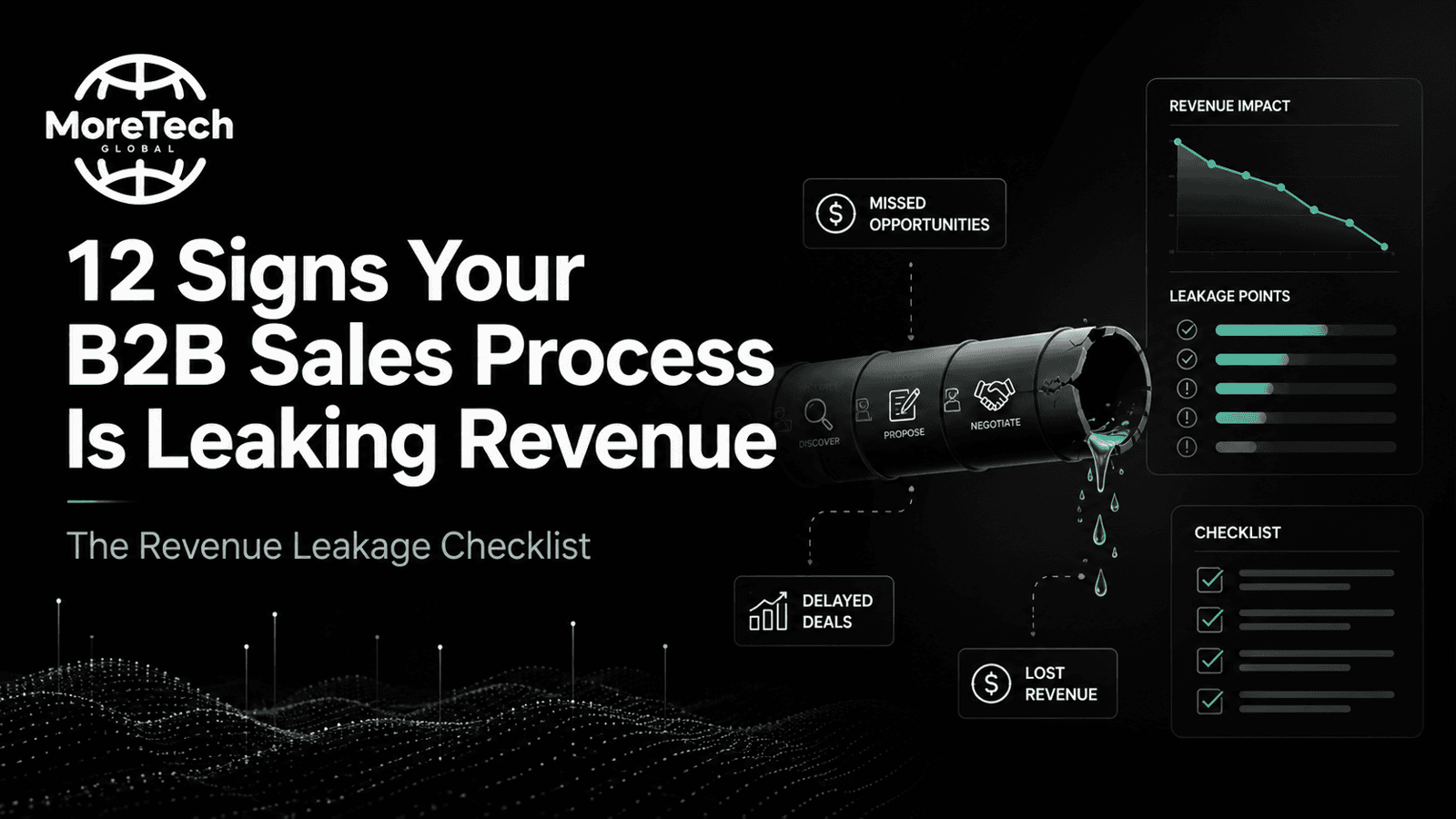
Article Brief
Discover the top 12 revenue leakage triggers in VVS sales, learn how to map your journey, automate with Process Builder, and reduce lost jobs by up to 30%.
Revenue Leakage in VVS Installations: The Silent Cost of Manual Follow‑Up
When a plumbing or heating contractor receives an inbound job enquiry, the first few minutes can decide whether that lead turns into a paid project or slips away to a competitor. In Sweden’s highly competitive VVS market, studies show that firms losing jobs due to delayed responses can see up to 30 % of their administrative time wasted and a similar percentage of potential revenue evaporate. The culprit is often the same: a slow, manual lead‑follow‑up process that never reaches the “automated business process” level.
1. Map the End‑to‑End Revenue Journey
Before you can stop leaking money, you must see where it leaks. Start with a simple flowchart:
- Lead Capture – phone call or web form submission.
- Initial Response – acknowledgement and request for details.
- Qualification – assess scope, urgency, and budget.
- Proposal & Quote – generate a price estimate.
- Negotiation & Agreement – finalize terms.
- Execution & Billing – perform work, issue invoice.
- Payment Collection – receive payment and close the loop.
Document each touchpoint. Note who owns it, what tools they use, and how long each step takes on average. This baseline will reveal bottlenecks that a simple automation can eliminate.
Case in Point: The 5‑Minute Rule
A study of Swedish VVS firms found that responding within five minutes increases the likelihood of closing a job by 70 %. That’s a hard‑to‑ignore statistic for any contractor who still relies on manual phone triage.
2. Identify the Common Leakage Triggers
Revenue leakage often hides in plain sight. Below are twelve proven examples that resonate with small VVS operations:
- Delayed Acknowledgement – leads wait too long for a reply.
- Incomplete Data Capture – missing address or scope details lead to inaccurate quotes.
- Manual Quote Generation – human error in pricing.
- No Follow‑Up Automation – no reminders if the client doesn’t respond.
- Billing Errors – wrong amounts, missing taxes.
- Untracked Work Orders – jobs slip through the cracks.
- Payment Delays – invoices not sent promptly.
- Lost Opportunities in CRM – no central record of conversations.
- Inconsistent Pricing Policies – ad‑hoc discounts create revenue gaps.
- Unclear Contract Terms – scope creep leads to underbilling.
- Manual Time Logging – overtime not captured accurately.
- Lack of Post‑Job Follow‑Up – missed upsell or referral chances.
Each point can be addressed with a targeted automation step. The key is to prioritize the ones that affect the most revenue and are easiest to automate.
3. Build an Automation Blueprint Using Process Builder
Process Builder, a low‑code workflow tool, lets you stitch together triggers, actions, and conditions without writing code. For VVS contractors, here’s a practical blueprint:
- Trigger 1: New Lead Form Submission – automatically create a lead record.
- Action 1: Send Immediate Acknowledgement Email – include a short questionnaire to capture missing details.
- Condition 1: If Lead Status = “Awaiting Details” after 2 hours, send Reminder SMS.
- Trigger 2: Lead Status = “Qualified” – auto‑generate a quote using predefined pricing rules.
- Action 2: Email Quote to Client and Notify Sales Rep.
- Condition 2: If No Response in 24 hours, send Follow‑Up Email.
- Trigger 3: Job Confirmed – create a work order and schedule technician via calendar integration.
- Action 3: Generate Invoice Automatically Once Work Completed.
- Condition 3: If Payment Not Received in 7 days, send Payment Reminder.
This sequence eliminates manual steps that traditionally cause delays. By automating the “automated business process,” you reduce human error and free up technicians to focus on field work.
4. Measure Leakage Reduction with a Simple Dashboard
Create a unified dashboard that tracks:
- Lead Response Time – average minutes from submission to first reply.
- Quote Accuracy Rate – percentage of quotes that match final invoices.
- Job Closure Ratio – leads turned into jobs.
- Invoice Collection Cycle – days between invoice sent and payment received.
- Revenue Leakage Score – calculated as (Total Potential Revenue – Actual Revenue) / Total Potential Revenue.
Update the dashboard weekly. A drop in the leakage score indicates that your automation is working; a spike signals a new bottleneck to address.
5. Iterate: The Continuous Improvement Loop
Automation isn’t a one‑time fix. Treat it as an ongoing process:
- Audit Monthly – review the dashboard and identify any step where delays reappear.
- Adjust Rules – tweak trigger conditions or add new actions (e.g., auto‑assign a senior technician for high‑value jobs).
- Train Staff – ensure every team member knows how to use the system and understands the importance of data entry accuracy.
- Scale Gradually – once core processes are stable, add advanced features like AI‑powered chatbots for instant answers or predictive scheduling based on historical demand.
This iterative approach aligns with the Revenue Leakage Prevention Checklist, which emphasizes continuous monitoring and enforcement.
Conclusion: From Manual Chaos to Automated Profitability
For small VVS contractors in Sweden, the cost of slow follow‑up is measurable: lost jobs, wasted admin time, and eroded margins. By mapping your revenue journey, pinpointing leakage triggers, implementing a Process Builder automation blueprint, monitoring with a dedicated dashboard, and iterating relentlessly, you can transform a reactive, manual workflow into a proactive, automated business process that captures every opportunity.
Ready to stop leaking revenue? Explore how an automated response system can cut your wait times below five minutes, or dive deeper into dedicated CRM solutions for VVS firms. For a hands‑on guide to building AI workflows that actually work, check out our practical guide.
Remember: every minute you wait is a potential dollar lost. Automate now and turn your lead pipeline into a revenue engine.
Related reading
This is exactly what we build for you.
MoreTech turns the ideas in this article into a working system for your business — lead capture, instant follow-up, and automation that runs itself.
People Also Read

2 September 2026
AI Follow-Up Automation: Faster Follow-Up Without Sounding Robotic
AI Follow‑Up Automation: Faster Outreach Without the Robot Voice When a Swedish VVS contractor answe...
Read article
2 September 2026
AI Sales Agent vs Human SDR: Where Does Each One Win?
AI Sales Agent vs Human SDR: Where Each One Wins When a Swedish VVS contractor receives an inbound c...
Read article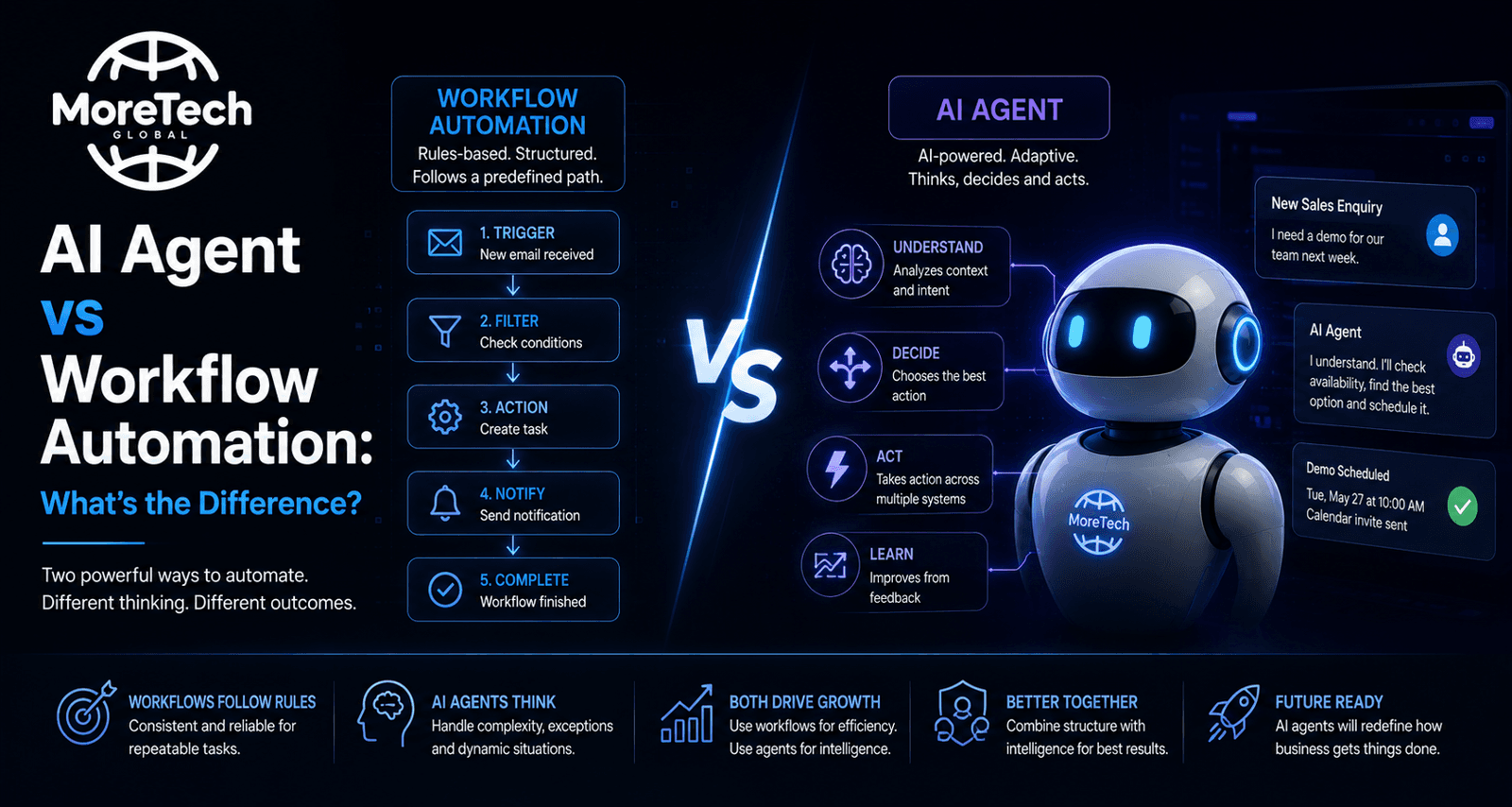
1 September 2026
AI Agent vs Workflow Automation: What's the Difference?
AI Agent vs Workflow Automation: What Small VVS Contractors Should Know When a Swedish plumbing inst...
Read article