
Article Brief
Discover how Swedish VVS contractors can cut response time, boost conversions, and keep a human tone with AI‑driven follow‑up automation.
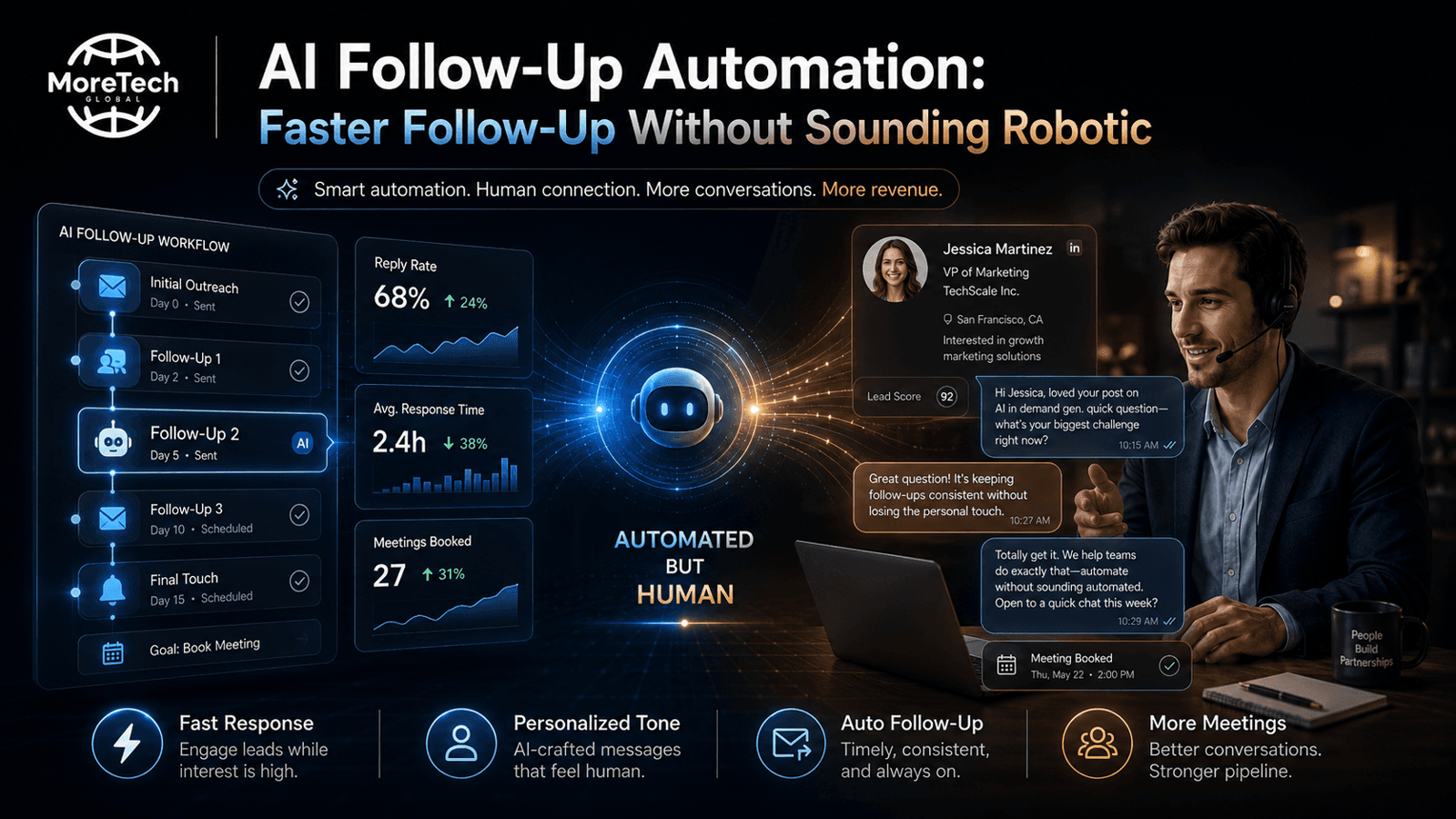
AI Follow‑Up Automation: Faster Outreach Without the Robot Voice
When a Swedish VVS contractor answers a call or receives an online enquiry, the first few minutes decide whether that lead turns into a job or slips to a competitor. The problem is not lack of interest; it’s the manual lag between inquiry and response. AI‑driven follow‑up automation can close that gap by scheduling replies, scoring leads, and personalising messages at scale—yet many small firms still fear a robotic tone or a steep learning curve.
1. The Core Problem: Manual Follow‑Up as a Revenue Leak
In the VVS sector, studies show that 30 % of potential revenue evaporates when responses are delayed beyond 24 hours. The culprit is a manual workflow: a technician notes the enquiry in a spreadsheet or a simple CRM, then waits for an email to be drafted and sent by hand. This process consumes valuable admin time and introduces human error.
AI follow‑up automation solves this by:
- Triggering on real events—e.g., when a lead lands on the pricing page or requests a quote.
- Scoring leads automatically based on engagement signals such as email opens, clicks, and website visits.
- Drafting context‑aware messages that mirror the contractor’s brand voice.
2. Choosing the Right Tool: CRM vs. Marketing Automation
Many small VVS firms already use a basic CRM to log leads. Adding AI follow‑up can be done in two ways:
- CRM‑Integrated AI – Tools like Clay pull lead data directly from the CRM, ensuring every outreach reflects the latest interaction history. This integration reduces duplication and keeps the conversation contextually relevant.
- Standalone Marketing Automation – Platforms such as Vellum focus on email sequences but require manual import of leads. They are cheaper to start with but can lead to data silos if not linked back to the primary CRM.
For a 3‑30 staff contractor, the cost of a full CRM integration is often offset by the time saved: a single AI agent can handle dozens of follow‑ups per day that would otherwise take an employee hours.
3. Building the Automation Blueprint in Four Phases
Implementing AI follow‑up doesn’t have to be a 12‑month overhaul. Follow this four‑step framework, each phase taking roughly one week for a small team:
- Data Hygiene (Day 1–3) – Export all current leads from the CRM, deduplicate, and tag by source (phone, web form, referral). Clean data ensures the AI can score accurately.
- Trigger Mapping (Day 4–5) – Identify key events that should fire a follow‑up: phone call logged, quote requested, or website page visited. Configure these triggers in the AI platform.
- Message Crafting (Day 6–7) – Write a base template for each trigger. Use the contractor’s tone—informal yet professional—and include a clear call to action. The AI will personalise by inserting lead name, service requested, and local context.
- Testing & Launch (Week 2) – Run a pilot with 10–20 leads, monitor open rates, click‑throughs, and responses. Adjust the scoring thresholds and message cadence based on real data before full rollout.
4. Personalisation Without Automation Fatigue
A common fear is that AI will produce generic, robotic emails. The key to avoiding this is contextual conditioning: feed the AI with specific prompts that reflect the contractor’s voice and local market nuances.
- Local Language Nuances – Include Swedish idioms or references to regional regulations (e.g., “VVS-standarden 2025”).
- Service‑Specific Phrasing – For heating installations, mention “effektiv värmefördelning” instead of generic “energy efficiency.”
- Human‑in‑the‑Loop (HITL) – Set a rule that any email with a response rate below 15 % triggers manual review. This keeps the AI learning and prevents stale messaging.
5. Measuring Success: From Open Rates to Job Bookings
Track these metrics to quantify ROI:
- Open Rate – Target 45 %+; a low rate indicates subject line issues.
- Click‑Through Rate (CTR) – Aim for 10 %+. CTR reflects relevance of the call to action.
- Response Time – Measure how quickly leads reply after the first AI email. A drop from 48 hours to under 12 hours can double conversion rates.
- Conversion Rate – Percentage of leads that become booked jobs. Compare pre‑automation (e.g., 8 %) vs post‑automation (e.g., 15 %).
6. Edge Cases: High‑Value Leads and Sensitive Information
Some enquiries involve large installations or require detailed quotes. For these, the AI should:
- Escalate to a human agent after the first personalized email if no response is received within 24 hours.
- Use secure messaging channels (e.g., encrypted email or SMS) when sharing sensitive data such as property details.
- Log all interactions in the CRM to maintain a single source of truth for billing and compliance.
7. Scaling Beyond Email: SMS, WhatsApp, and Voice Bots
Once email automation is stable, expand to other channels that Swedish VVS contractors use:
- SMS Follow‑Ups – Send a quick “Hej [Name], vi har noterat
Related reading
- CRM and AI integration
- Human‑in‑the‑Loop approach
- Impact of slow response times
- Revenue leakage in sales
- Why leads go cold
Sources
This is exactly what we build for you.
MoreTech turns the ideas in this article into a working system for your business — lead capture, instant follow-up, and automation that runs itself.
People Also Read
2 September 2026
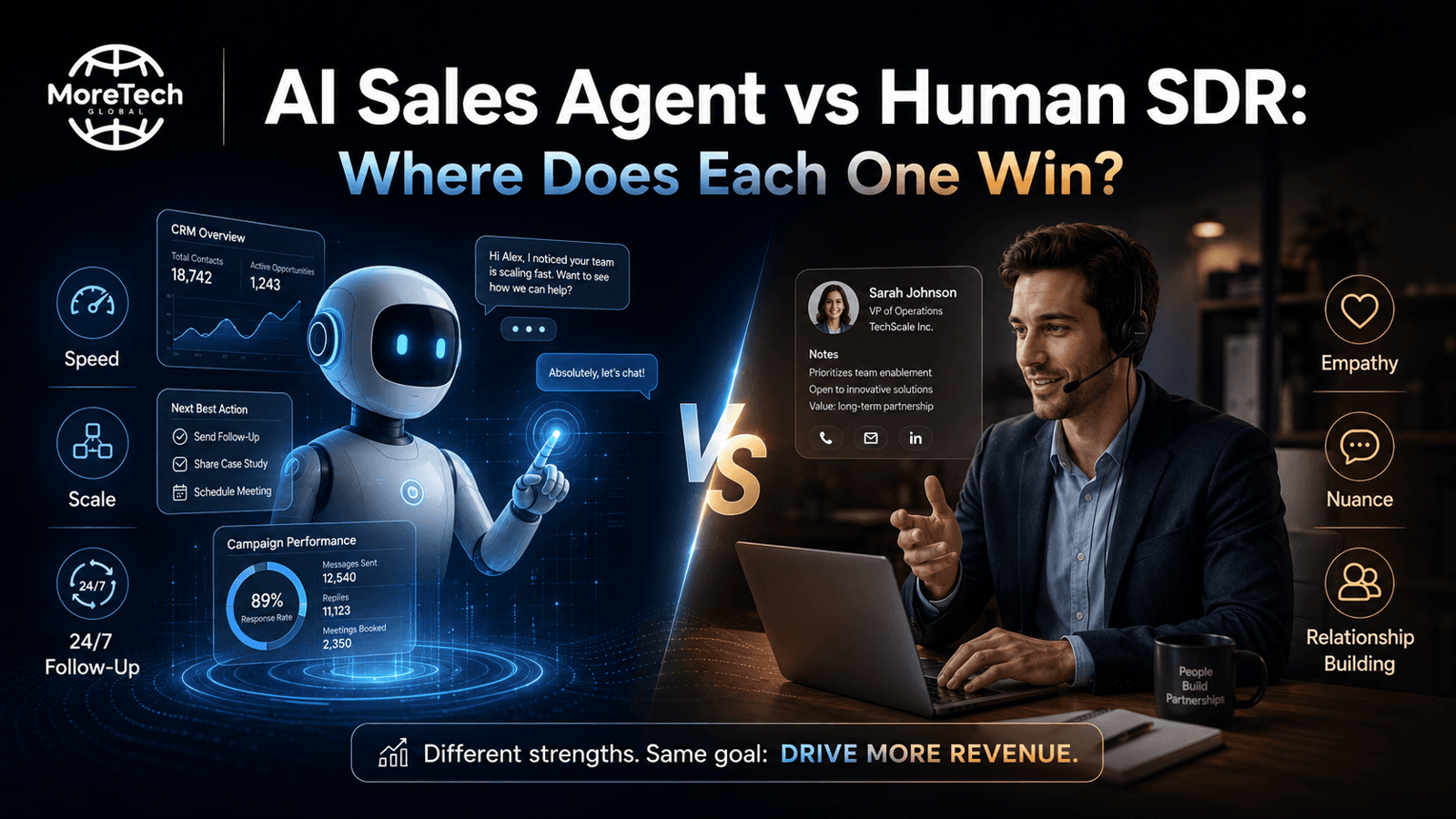
AI Sales Agent vs Human SDR: Where Does Each One Win?
AI Sales Agent vs Human SDR: Where Each One Wins When a Swedish VVS contractor receives an inbound c...
Read article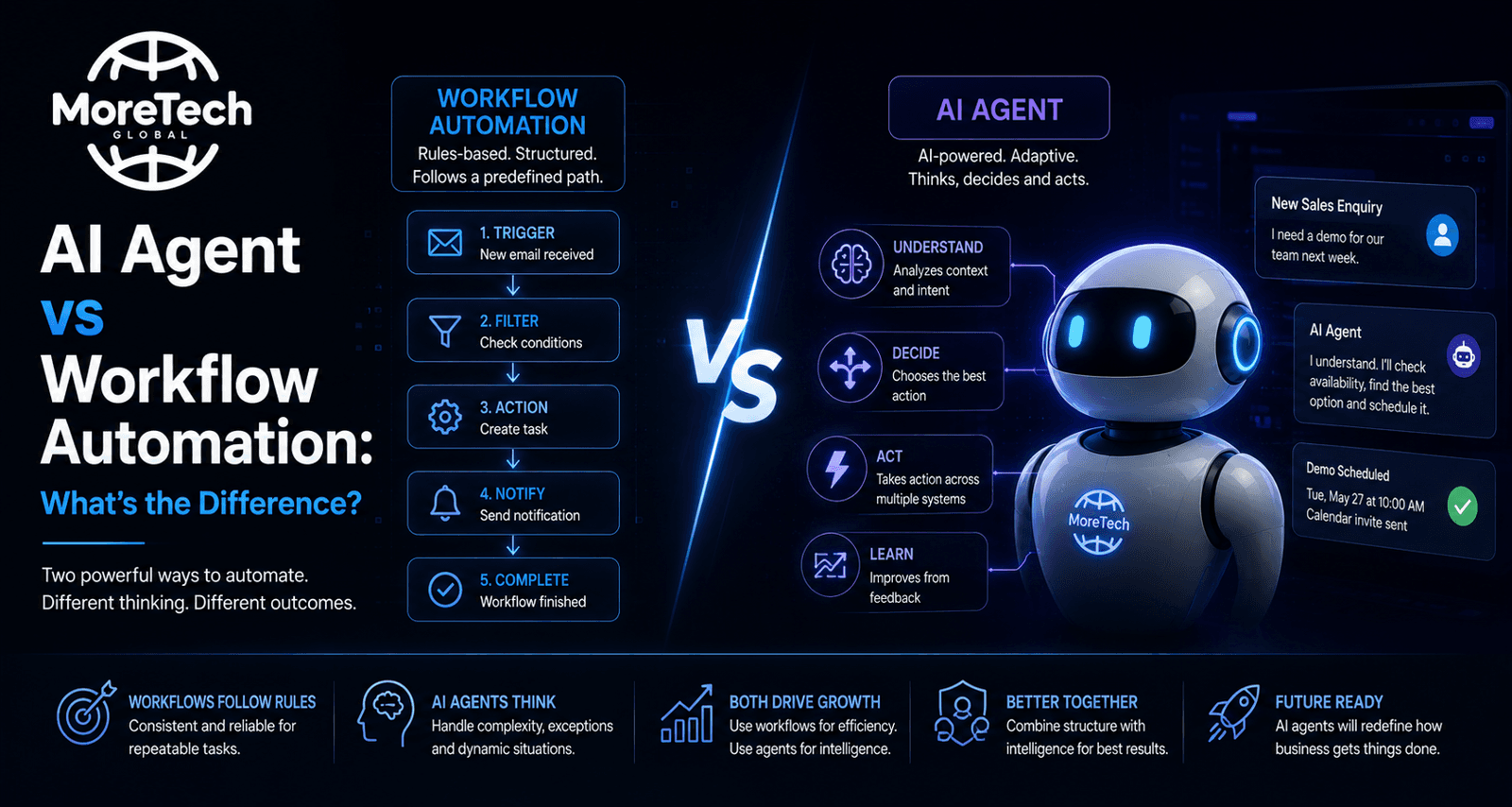
1 September 2026
AI Agent vs Workflow Automation: What's the Difference?
AI Agent vs Workflow Automation: What Small VVS Contractors Should Know When a Swedish plumbing inst...
Read article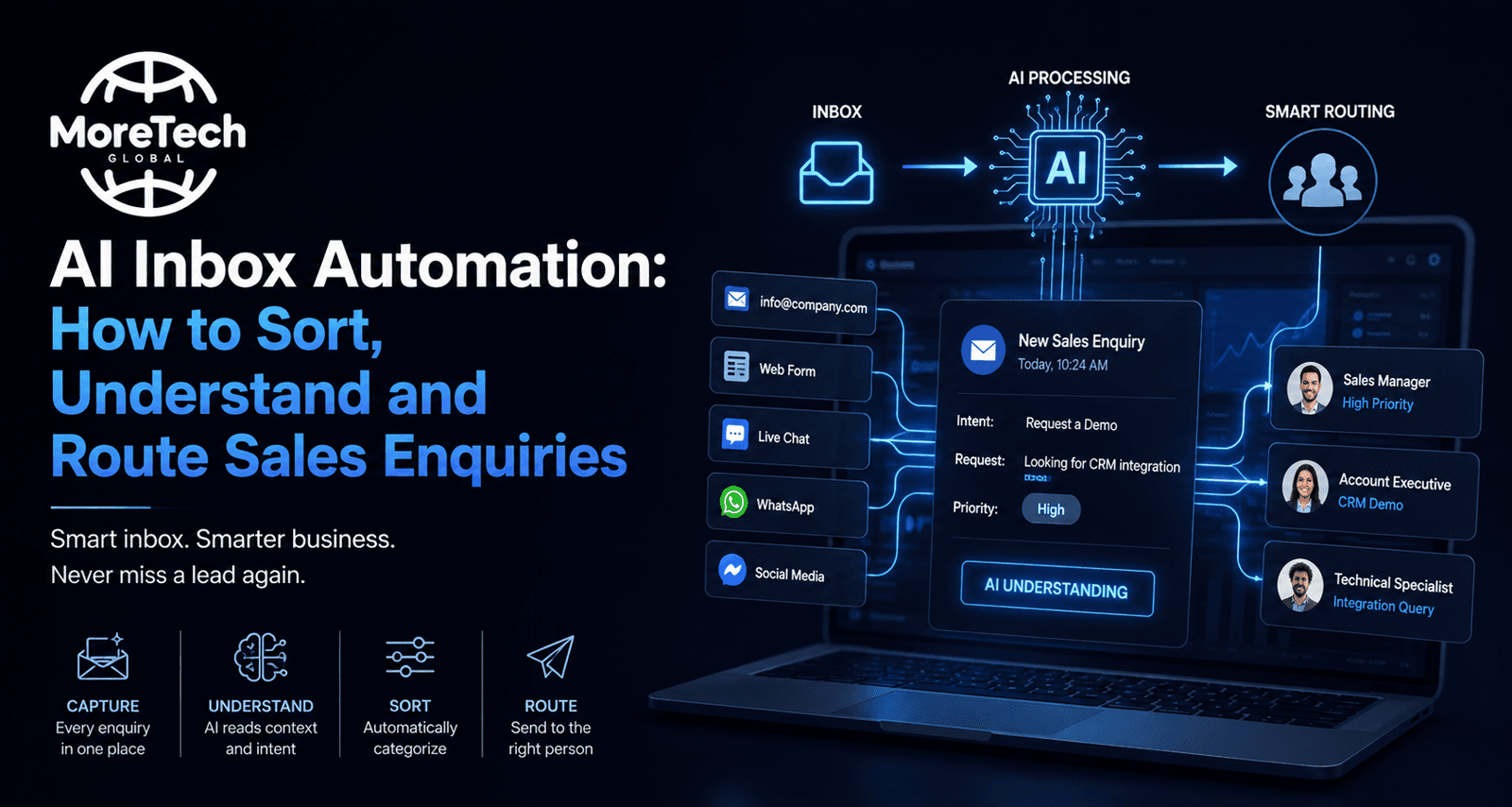
1 September 2026
AI Inbox Automation: How to Sort, Understand and Route Sales Enquiries
AI Inbox Automation: Turning Every Call‑In into a Booked Job For a Swedish VVS contractor with three...
Read article