Article Brief
Discover how AI sales agents and human SDRs compare for Swedish VVS contractors.
AI Sales Agent vs Human SDR: Where Each One Wins
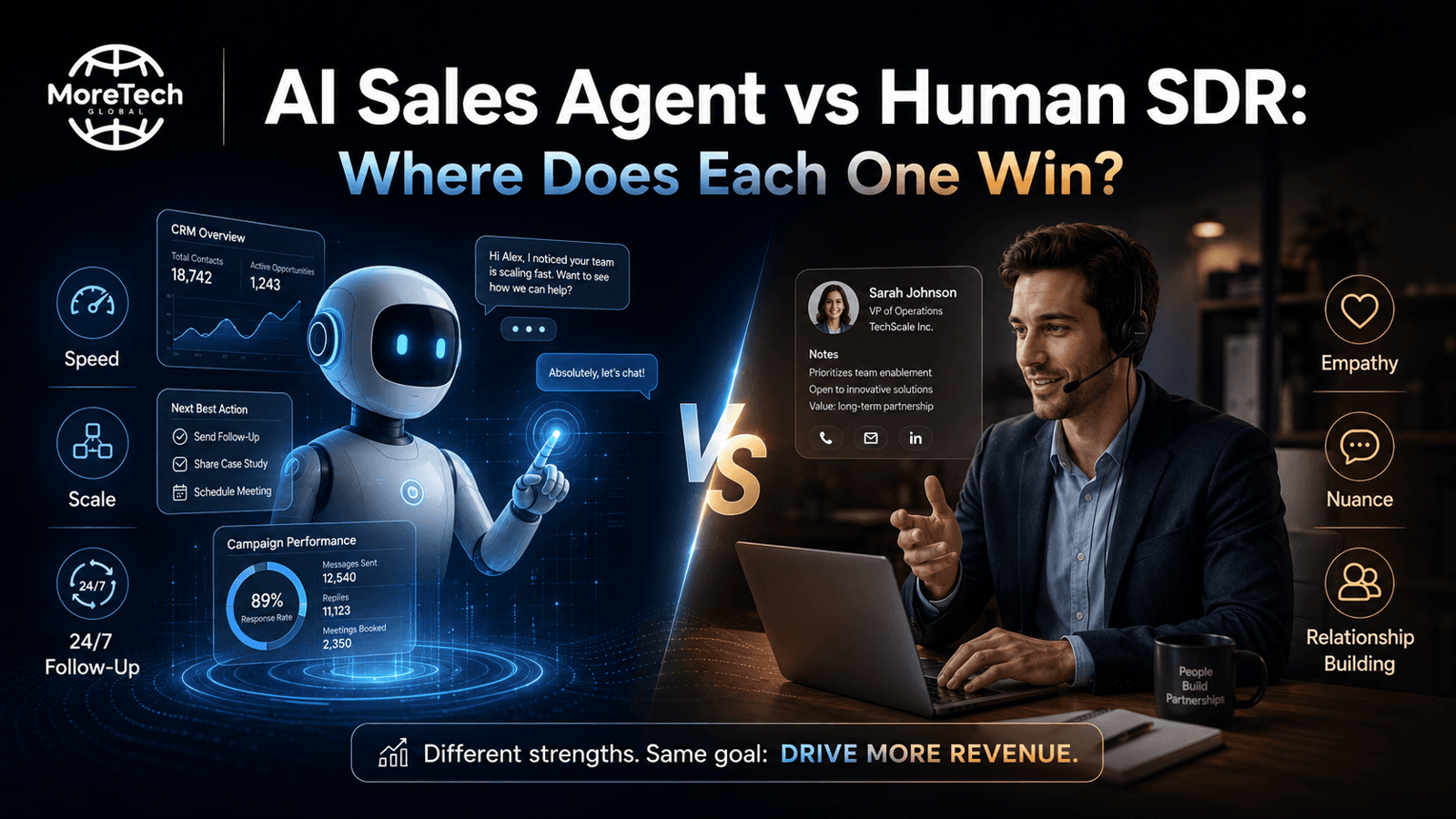
When a Swedish VVS contractor receives an inbound call, the clock starts ticking. The decision to deploy an AI sales agent or keep a human Sales Development Representative (SDR) hinges on who can turn that lead into a booked job faster and with less friction. In practice, the answer is not “AI or human” but a hybrid model that leverages each side’s strengths.
1. Volume vs. Nuance: The Core Distinction
AI sales agents excel at high‑volume, repetitive tasks—sending the first email, scheduling follow‑ups, and qualifying leads based on predefined criteria. They are always online, can handle thousands of interactions per day, and never suffer from fatigue. Human SDRs, by contrast, shine when a conversation requires judgment, empathy, or complex objection handling. A Swedish contractor dealing with a homeowner who questions pricing or installation timelines needs a human touch to build trust.
Research from Aircall shows that AI agents manage the “repetitive, high‑volume stages of outbound” while humans own the qualified conversation and relationship work that turns interest into pipeline (source: Aircall). This split is especially relevant for VVS firms where each job’s margin can be thin.
2. Response Time as a Competitive Edge
A study by Qualified notes that AI SDRs are “always on,” enabling instant responses to inbound leads (source: Qualified). In the VVS market, a delay of even 30 minutes can mean losing a job to a competitor who answered first. AI agents can triage and send an initial acknowledgment within seconds, while a human SDR can then focus on deeper engagement.
For example, a contractor that integrates an AI agent to auto‑respond with a brief “Thank you for your enquiry; we’ll be in touch shortly” can reduce the perceived wait time dramatically. The human follow‑up can then address specific concerns—such as material choices or scheduling—that require expertise.
3. Qualification Accuracy and Lead Scoring
AI systems use data patterns to score leads, flagging those most likely to convert. Salesmotion’s 2026 ROI comparison highlights that AI agents produce higher volume of qualified interactions (source: Salesmotion). However, when a prospect presents an unexpected objection—say, a budget cut—they may receive a generic reply that erodes credibility.
Human SDRs can read subtle cues and adjust the pitch accordingly. In practice, a hybrid approach where AI does initial qualification and a human steps in for high‑score leads yields the best conversion rates. This mirrors the “account‑specific strategy” model advocated by Salesmotion, which treats each account as more than just an email to send.
4. Cost Efficiency vs. Relationship Building
Deploying AI agents can reduce labor costs and eliminate overtime expenses. The State of AI Sales Prospecting (2026) reports a 29.5% CAGR in the AI SDR market, with 22% of teams fully replacing human SDRs (source: Autobound). Yet, for VVS contractors whose revenue hinges on repeat business and referrals, the trust built by a human conversation can be priceless.
Consider a scenario where an AI agent schedules a callback. The subsequent call is handled by a seasoned SDR who can discuss local regulations, warranty terms, and after‑sales support—elements that foster long‑term loyalty. Thus, while AI cuts costs on the front end, humans add value in the back end.
5. Integration with Existing CRM Workflows
AI agents must feed data into the contractor’s existing Customer Relationship Management (CRM) system to avoid siloed information. A well‑configured integration ensures that every touchpoint—email, call log, and meeting note—is captured automatically.
The “Why VVS Companies Lose Profitable Jobs—and How a Dedicated CRM Can Turn the Tide” article explains how a unified data layer prevents revenue leakage (source: MoreTech Blog). By routing AI‑generated interactions straight into the CRM, contractors can maintain a single source of truth and avoid manual entry errors that often lead to lost jobs.
6. The Hybrid Playbook for Swedish VVS Contractors
- Deploy an AI agent for inbound triage: Auto‑respond within seconds, capture basic details, and score the lead.
- Flag high‑potential leads to a human SDR: Use AI scoring thresholds to route only the most promising prospects to a human.
- Human SDR handles discovery and objection resolution: Focus on building rapport, explaining technical nuances, and negotiating terms.
- Automate follow‑up sequences: Once an appointment is set, let AI send reminders and post‑meeting summaries.
- Continuous feedback loop: Human SDRs review AI responses for quality; insights refine the AI’s scoring model.
This framework balances speed with personalization, ensuring that no lead slips through the cracks while keeping costs in check. It also aligns with the “Automated Business” guide on how small businesses can grow without adding chaos (source: MoreTech Blog).
7. Measuring Success Beyond Call Volume
Key performance indicators for this hybrid model include:
- Lead response time: Target < 5 minutes for AI triage.
- Conversion rate from qualified lead to booked job: Aim for a 15–20% lift over baseline.
- Customer satisfaction scores: Monitor post‑job surveys for trust indicators.
- Cost per qualified lead: Compare AI vs. human SDR spend.
By tracking these metrics, VVS contractors can quantify the ROI of their hybrid sales approach and adjust resource allocation accordingly.
8. Edge Cases Where Human SDRs Must Lead
Some scenarios still
Sources
- State of AI Sales Prospecting (2026): Data & Trends
- AI Sales Agents: The 2026 Complete Guide for SDR Teams | Aircall
- 9 Best AI SDRs to manage inbound leads & lead qualification
- AI Sales Tools: The 2026 Buyer's Guide for B2B | Salesmotion
- Medium
- What Is Sales Conversion Rate? Benchmarks, Strategies, Optimization | Apollo
Related reading
This is exactly what we build for you.
MoreTech turns the ideas in this article into a working system for your business — lead capture, instant follow-up, and automation that runs itself.
People Also Read
2 September 2026
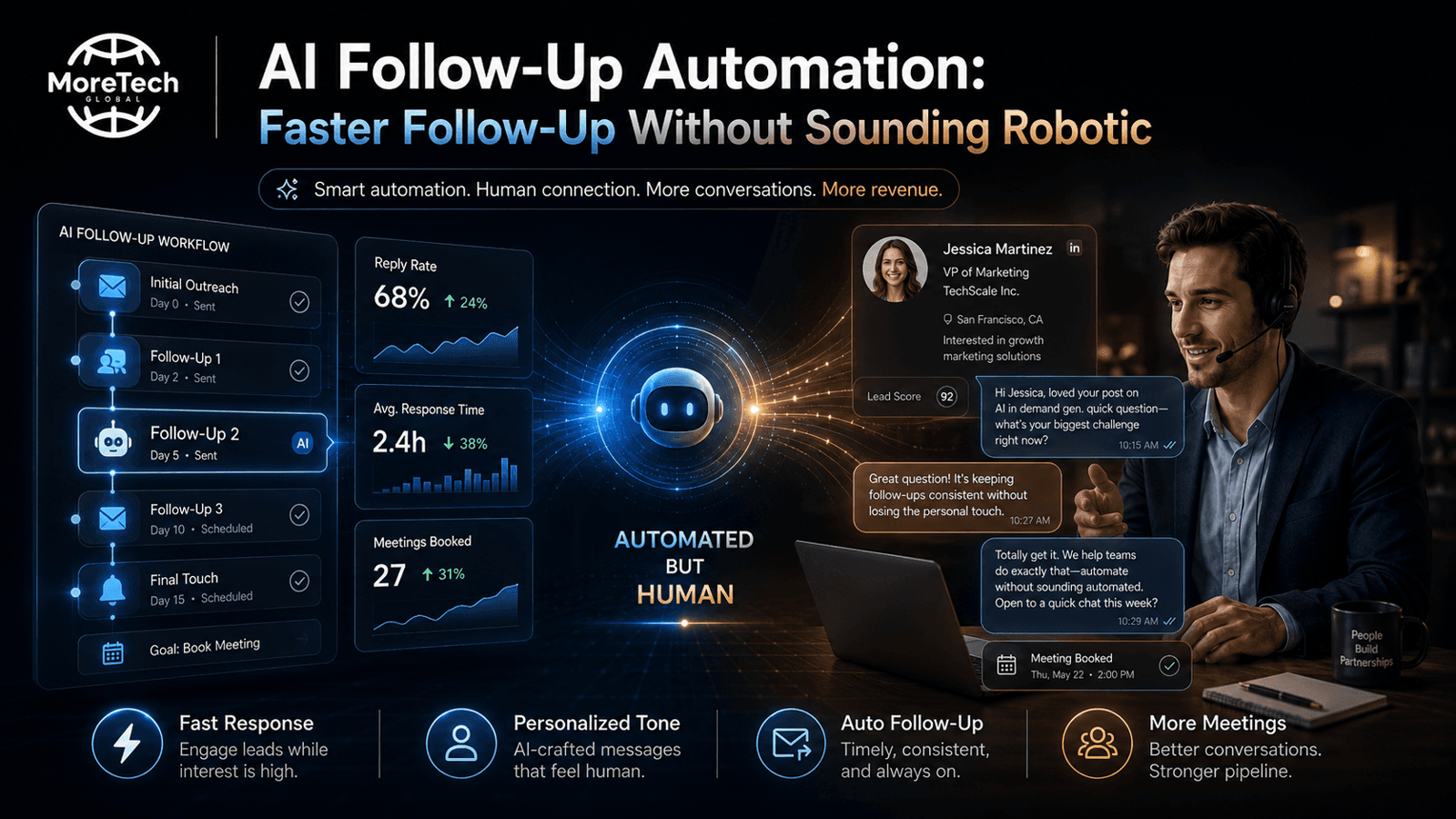
AI Follow-Up Automation: Faster Follow-Up Without Sounding Robotic
AI Follow‑Up Automation: Faster Outreach Without the Robot Voice When a Swedish VVS contractor answe...
Read article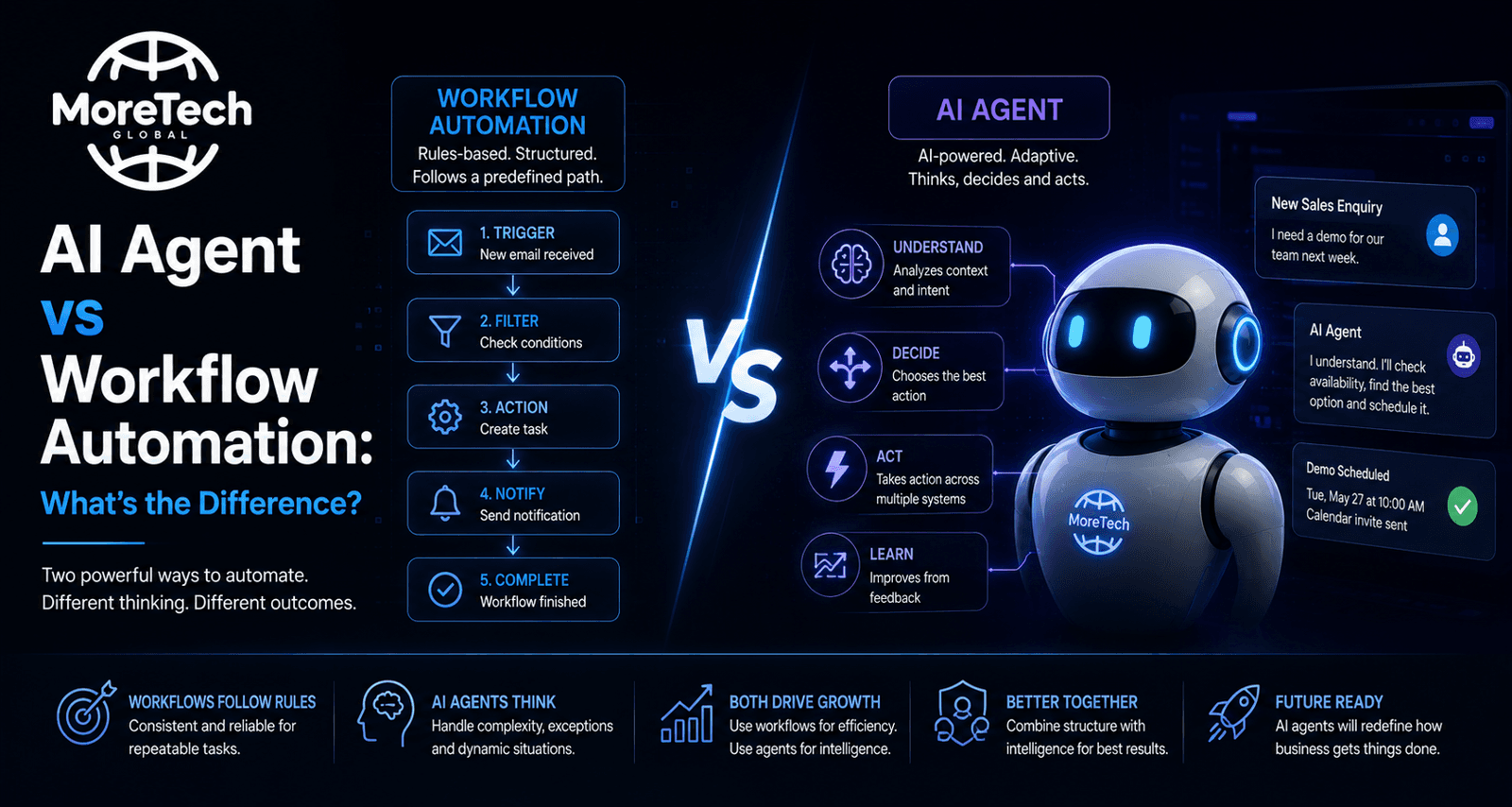
1 September 2026
AI Agent vs Workflow Automation: What's the Difference?
AI Agent vs Workflow Automation: What Small VVS Contractors Should Know When a Swedish plumbing inst...
Read article
1 September 2026
AI Inbox Automation: How to Sort, Understand and Route Sales Enquiries
AI Inbox Automation: Turning Every Call‑In into a Booked Job For a Swedish VVS contractor with three...
Read article