
Article Brief
Discover how AI agents and workflow automation differ and how Swedish VVS contractors can use them to close the gap between inquiry and invoice, boost response
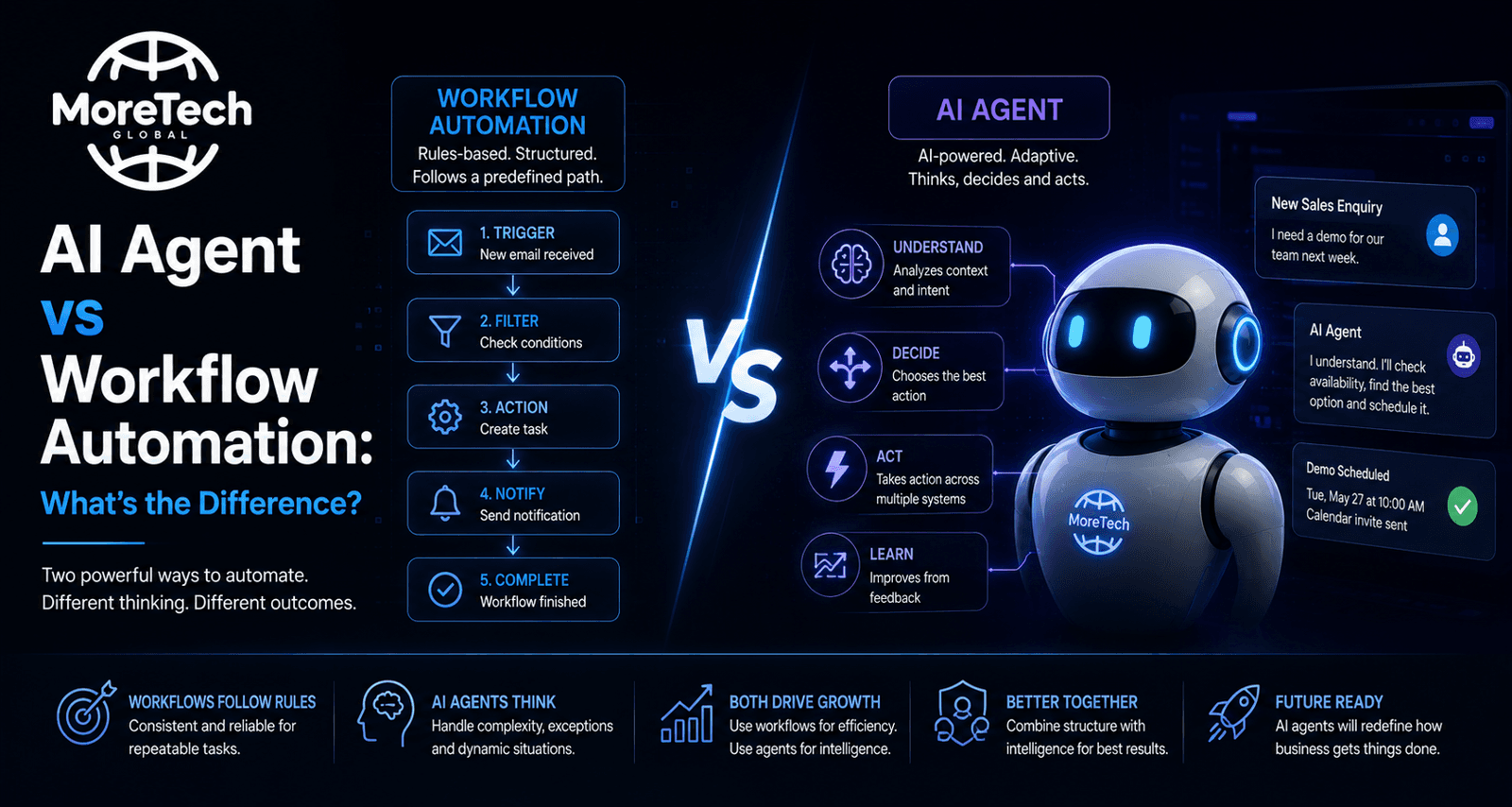
AI Agent vs Workflow Automation: What Small VVS Contractors Should Know
When a Swedish plumbing installer receives an inbound call, the first few seconds decide whether that lead turns into a booked job or slips away to a competitor. For firms with 3‑30 staff, the cost of a slow, manual follow‑up can be measured in lost revenue and wasted time. The real question is not “should we automate?” but “what kind of automation will close the gap between inquiry and invoice?”
1. Distinguishing the Two: Rules vs Reasoning
Automation, as defined by Zapier, is a set of predefined triggers and actions—“When X happens, do Y.” It works best for repetitive, predictable tasks: sending a confirmation email after a form submission or updating a spreadsheet when a new lead arrives.
AI agents, on the other hand, bring autonomy. According to AWS’s executive guide, an AI agent can reason, adapt, and make decisions based on dynamic inputs. The more autonomy it has, the more flexible—and complex—its behavior becomes. For a VVS contractor, that means an agent could triage leads by urgency, estimate job size from photos, or even negotiate follow‑up times without human intervention.
In practice:
- Automation: “If a lead submits the web form, send a thank‑you email and add to CRM.”
- AI Agent: “When a new lead arrives, analyze their location, estimate required parts, and propose an appointment slot that maximizes technician utilization.”
2. The Workflow Gap: Where Manual Processes Leak Revenue
A recent study of Swedish VVS firms found that 30 % of potential revenue evaporates due to delayed responses—often because the first follow‑up is still done by hand. This leakage manifests in three stages:
- Lead Capture: A phone call or web form lands in a shared inbox.
- Qualification: The installer must decide if the job fits capacity and skill set.
- Scheduling & Confirmation: Coordinating dates, parts, and payment terms.
Each hand‑off introduces latency. Automation can eliminate stage 1 and 2 by routing leads directly to a CRM or scheduling tool. AI agents can close stage 3 by negotiating times and sending dynamic quotes in real time.
3. Decision Framework: When to Automate, When to Deploy an Agent
Use this three‑step matrix to choose the right technology for each task:
- Assess Predictability: Is the task rule‑based? If yes, automation wins.
- Measure Complexity: Does the task require interpretation of unstructured data (e.g., photos, voice notes)? If yes, consider an AI agent.
- Evaluate ROI Timing: Can a simple workflow reduce response time by 30 %? If so, start with automation; add agents later for incremental gains.
Example: Sending a standard quote template after a form submission is a perfect automation candidate. Estimating pipe length from an uploaded photo requires image recognition and contextual reasoning—an AI agent’s domain.
4. Integration Pitfalls: The “Automation‑Only” Trap
Many small contractors jump straight into full‑blown workflow tools, only to find that the system is rigid and hard to tweak. A 2026 Agentic Automation report notes that 99 % of firms mistakenly think they’re building agents when they’re merely orchestrating tasks.
- Over‑automation: Complex rules can become brittle; a single change in pricing policy may break the entire flow.
- Lack of Governance: Without clear ownership, updates drift and errors accumulate.
- Hidden Costs: Integrating multiple SaaS products often incurs hidden subscription fees that outweigh time savings.
The remedy is incremental: start with a lightweight automation layer (e.g., Zapier or Integromat) to handle the obvious “if‑then” steps, then layer an AI agent on top for the nuanced decisions.
5. Practical Implementation Roadmap for VVS Firms
Below is a four‑phase rollout that balances speed and sophistication:
- Phase 1 – Capture & Notify (Weeks 1–2): Use a web form that auto‑creates a lead in your CRM. Trigger an email confirmation via Zapier.
- Phase 2 – Qualification Bot (Weeks 3–4): Deploy a simple chatbot on the website to ask for pipe length and material type. Feed responses into the CRM.
- Phase 3 – AI Estimator (Months 1–2): Integrate an image‑recognition API that analyses uploaded photos of the installation site, estimates required parts, and suggests a price range.
- Phase 4 – Dynamic Scheduler (Month 3): Replace manual calendar invites with an AI agent that negotiates optimal dates based on technician availability and travel time.
Each phase should be measured against key metrics: lead‑to‑quote time, quote acceptance rate, and technician utilization. Adjust the roadmap if a metric falls below target.
6. Governance & Trust: The Human‑In‑The‑Loop Principle
Even the most sophisticated AI agent needs oversight. For VVS contractors, the simplest governance model is:
- Approval Layer: All AI‑generated quotes must be reviewed by a senior technician before sending.
- Audit Trail: Log every decision the agent makes—who it was, why, and what data influenced it.
- Feedback Loop: Capture customer satisfaction after each job to refine the agent’s reasoning model.
Sources
- Revenue recognition revisited : Market reactions to IFRS 15
- Future of AI Agents: Top Trends in 2026 - Blue Prism
- Publication 334 (2025), Tax Guide for Small Business | Internal Revenue Service
- Workflow automation: Definition, tutorial, and tools
- A leader’s guide to advanced team structures in an agentic world | AWS Events
- 15 Zapier Automations for Small Businesses in 2026
Related reading
This is exactly what we build for you.
MoreTech turns the ideas in this article into a working system for your business — lead capture, instant follow-up, and automation that runs itself.
People Also Read
2 September 2026
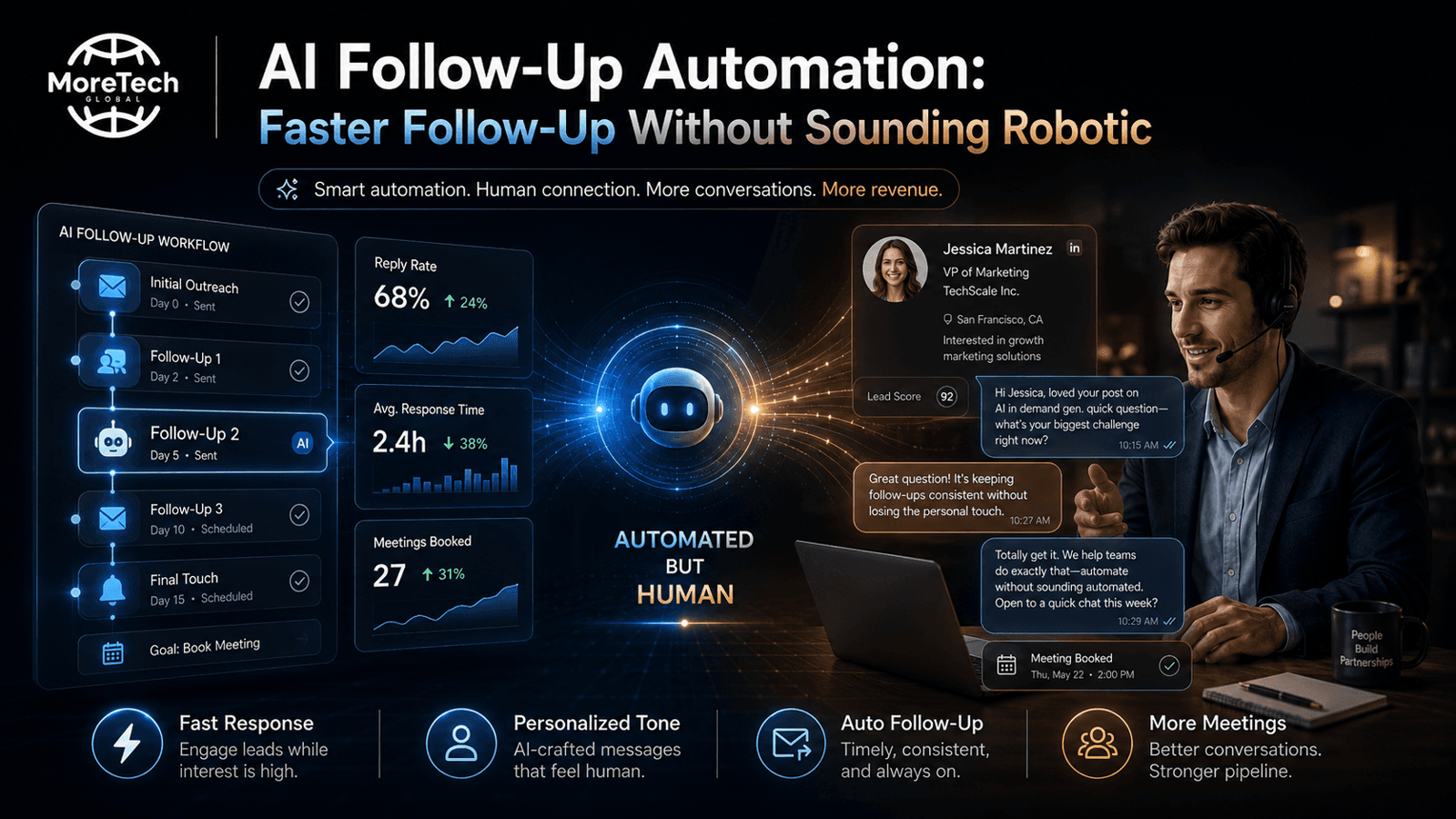
AI Follow-Up Automation: Faster Follow-Up Without Sounding Robotic
AI Follow‑Up Automation: Faster Outreach Without the Robot Voice When a Swedish VVS contractor answe...
Read article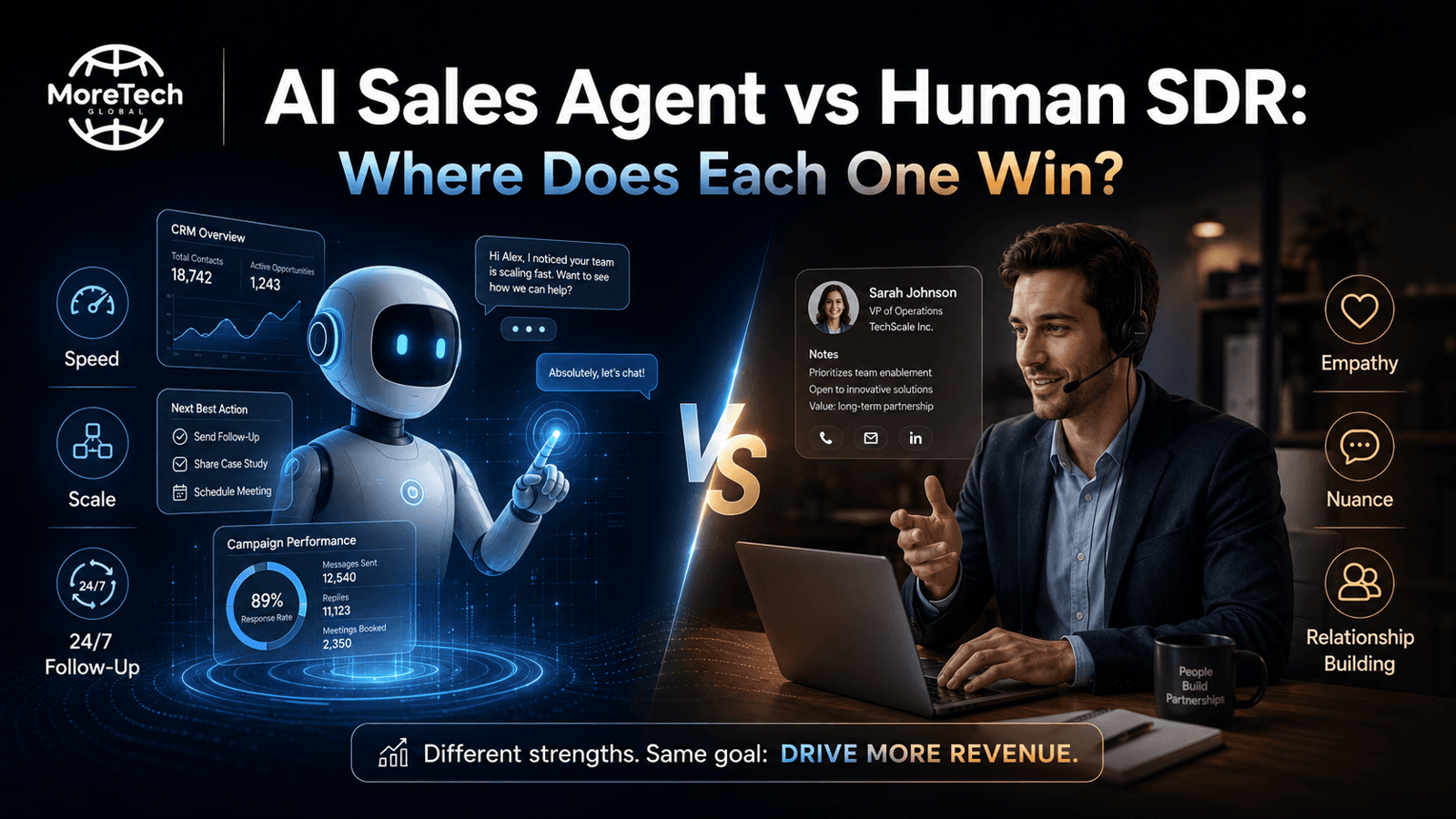
2 September 2026
AI Sales Agent vs Human SDR: Where Does Each One Win?
AI Sales Agent vs Human SDR: Where Each One Wins When a Swedish VVS contractor receives an inbound c...
Read article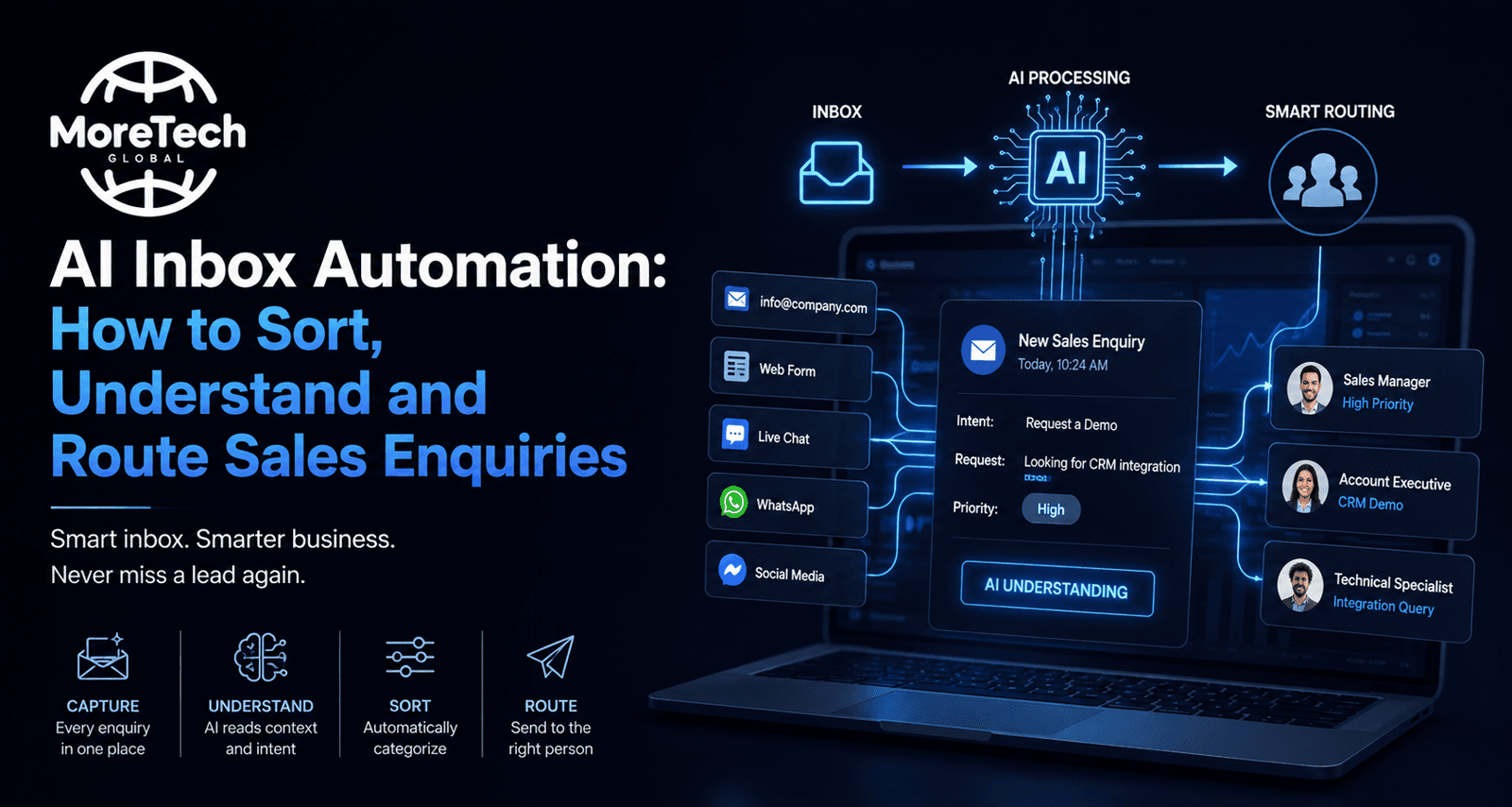
1 September 2026
AI Inbox Automation: How to Sort, Understand and Route Sales Enquiries
AI Inbox Automation: Turning Every Call‑In into a Booked Job For a Swedish VVS contractor with three...
Read article