

Article Brief
Learn how business process automation consulting helps companies reduce manual work, improve lead follow-up, automate documents, connect CRM systems, and build scalable workflows without adding chaos.
Article Brief
Business process automation consulting helps companies identify repetitive tasks, improve messy workflows, connect tools, reduce manual errors, and build systems that save time across sales, finance, operations, support, healthcare, lending, procurement, and reporting.
The real value is not automation for the sake of automation. The value is building a clear operating system where leads are followed up, documents move correctly, reports stay visible, approvals do not get buried, and teams are not forced to babysit the same task every day.
Introduction: Automation Should Make Work Easier, Not More Confusing
Business process automation consulting is the process of reviewing how your company works, finding repetitive or error-prone tasks, and building automated workflows that make those tasks faster, clearer, and easier to manage.
The honest answer is this: most businesses do not have an automation problem at first. They have a messy process problem.
- A lead enters through a form, but nobody updates the CRM.
- A proposal is sent, but follow-up depends on someone remembering it.
- An invoice arrives, but approval lives in a long email thread.
- A customer asks for support, but the answer is hidden in three tools and someone’s memory.
That is not a workflow. That is a treasure hunt with business consequences.
A strong business process automation consulting approach fixes the process first and then builds automation around it. This is also where MoreTechGlobal’s AI-powered growth systems fit naturally, because the company focuses on connected systems that attract, qualify, convert, automate, and report instead of adding random tools that create more noise.

Figure 1. Automation planning works better when teams discuss the actual workflow before choosing tools.
What Is Business Process Automation Consulting?
Business process automation consulting helps a company understand which tasks should be automated, which tools should be connected, and which workflows need to be redesigned before automation begins.
A good business process automation consultant usually helps with the following work:
- Mapping current workflows
- Finding manual bottlenecks
- Removing duplicate data entry
- Connecting CRM, website, email, forms, dashboards, and internal tools
- Building approval workflows
- Automating document handling
- Improving lead nurturing and follow-up
- Creating reporting and performance visibility
- Testing automation before full rollout
- Training the team so the system is actually used
This matters because business automation consulting is not just about installing software. Anyone can sign up for another tool. The harder part is making sure the tool fits how the business actually works.
A practical automation consultant looks at the whole system. For example, MoreTechGlobal’s CRM automation and AI workflow services can support lead capture, qualification, follow-up, internal routing, sales reporting, and customer communication in one connected growth system.
That is the difference between “we bought a tool” and “our work actually moves better now.”
Business Process Automation vs Robotic Process Automation
One of the most common questions is about business process automation vs robotic process automation.
Here is the practical way to think about it.
Business process automation, or BPA, focuses on automating complete business processes. That could include lead intake, CRM updates, email follow-up, document approval, invoice routing, reporting, and customer onboarding.
Robotic process automation, or RPA, usually focuses on using software bots to perform repetitive screen-based tasks. For example, copying data from one system into another, downloading reports, moving files, or filling forms.
RPA can be useful. But it is not always the right first move. If the process itself is broken, RPA may simply help you do the wrong thing faster. Efficient chaos is still chaos. It just wears nicer shoes.
A business may compare something like droven.io RPA and business automation when researching tools, but the better question is not “Which tool is trendy?” The better question is “Which part of our workflow needs to be fixed, connected, or automated first?”
That is why MoreTechGlobal’s automation services focus on architecture before build. The goal is to map the funnel, offer, follow-up, data, CRM, website, and reporting before deciding whether the solution needs RPA, AI automation, CRM automation, custom software, or simpler workflow automation.
Why Companies Start Looking for Automation Consulting
Most companies do not wake up one morning excited to redesign workflows. They start looking for business process automation consultants when work starts feeling heavier than it should.
Leads Are Coming In, But Follow-Up Is Weak
Many growing companies generate leads from ads, SEO, referrals, social media, or forms. The problem is what happens next.
If leads are not routed, scored, contacted, and nurtured quickly, they go cold. This is why automated lead follow-up systems matter. Follow-up should not depend on memory, mood, or someone checking a spreadsheet at the right time.
A connected system can move leads from form submission to CRM entry, email sequence, sales notification, qualification, and reporting. That is also where B2B lead generation growth systems become more useful than isolated lead lists.
Sales and Marketing Tools Do Not Talk to Each Other
A business may have a CRM, email platform, website forms, calendar tool, reporting sheet, and ad platform. But if those tools do not share data properly, the team still works manually.
A good CRM and marketing automation workflow connects the buyer journey from first contact to conversion. This is where MoreTechGlobal’s CRM systems and marketing automation can help teams build clearer pipelines, better nurturing, and cleaner reporting.
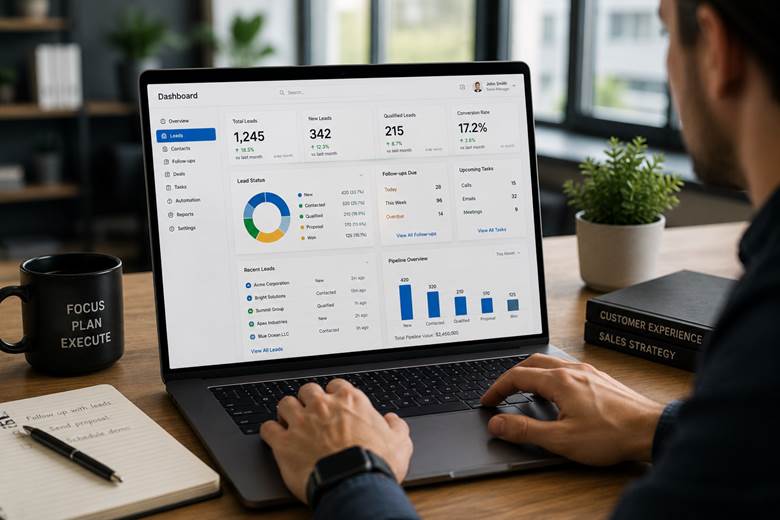
Figure 2. A clear dashboard helps teams see lead status, follow-ups, pipeline value, and performance without chasing updates manually.
Documents Are Slowing Everything Down
Business document automation is useful when proposals, contracts, invoices, onboarding forms, approvals, reports, or customer documents are created and moved manually.
For example, lending companies may need top-rated document processing lending automation for small businesses 2026 because loan applications require forms, identity checks, income documents, risk notes, approvals, and status updates.
Cleaning companies may search for ways to automate check payments to bank account for cleaning business clients because payment collection, invoice matching, and reminders become painful as client numbers grow.
The pattern is the same: if the document is predictable, repeated, and tied to a decision, it is a strong automation candidate.

Figure 3. Document automation can reduce delays in invoices, approvals, payments, and internal finance workflows.
Reporting Is Manual and Late
Business intelligence automation helps companies turn scattered data into useful reporting.
If a manager needs to ask three people for updates every Friday, the reporting system is not doing its job. A proper business intelligence automation setup can pull data from CRM, forms, ads, website analytics, sales activity, and operational tools into dashboards.
This connects directly with MoreTechGlobal’s reporting and growth tracking services, where automation is not only about doing work faster but also seeing what is working.
The Business Is Growing, But the Team Is Tired
Small companies often hire more people when work increases. Sometimes that is necessary. But sometimes the real issue is that the team is repeating tasks that software should handle.
A small business automation consultant can help identify where automation gives the team time back without damaging customer experience.
This is especially important for service businesses, SaaS companies, retailers, hospitality teams, logistics companies, education providers, and growth-focused SMEs that need better systems without becoming overly complicated.
Common Business Problems Solved With Power Automate and Other Tools
Many companies search for common business problems solved with Power Automate because they already use Microsoft tools and want to reduce repetitive work.
- Email alerts
- Approval workflows
- File movement
- Form submissions
- Spreadsheet updates
- SharePoint tasks
- Teams notifications
- Simple CRM-related triggers
- Invoice routing
- Reminder flows
But Power Automate is only one option. Depending on the business, the solution may involve HubSpot, GoHighLevel, Zapier, Make, custom APIs, custom portals, AI agents, dashboards, or a fully custom software layer.
For example, GoHighLevel lead nurturing automation local business workflows can work well for local service businesses that need lead capture, SMS/email follow-up, appointment reminders, and pipeline tracking.
For companies with more complex needs, custom software development and API integrations may be more reliable than stacking ten tools on top of each other and hoping they stay friendly. Hope is not an integration strategy. We have all been there.
Where Business Process Automation Creates the Most Value
Automation works best when it improves a process that is repetitive, measurable, and important to business outcomes.
1. Lead Capture and Qualification
When a visitor fills out a website form, downloads a guide, books a call, or responds to a campaign, automation can capture the lead, qualify it, assign it, and trigger follow-up.
This connects naturally with growth systems for B2B lead generation and follow-up systems that stop leads from going cold.
- Form submission
- CRM record creation
- Lead scoring
- Email or SMS response
- Sales notification
- Calendar booking
- Follow-up sequence
- Dashboard update
This is simple in theory. In practice, this is where many businesses lose money quietly.
2. CRM and Sales Pipeline Automation
A CRM should not be a digital graveyard where leads go to be forgotten.
A proper CRM vs marketing automation workflow helps teams understand what belongs in the CRM and what should be automated through nurture sequences, reminders, or customer journeys.
With MoreTechGlobal’s CRM automation services, businesses can create clearer sales stages, reduce manual updates, and make follow-up more consistent.
3. Customer Onboarding
Customer onboarding often includes forms, welcome emails, document collection, internal task assignment, account setup, training material, and status updates.
If every new customer creates internal confusion, automation can help. A better onboarding system can trigger tasks, send documents, notify team members, update dashboards, and keep customers informed without someone manually pushing every step.
This is a practical use case for digital business automation, especially when growth starts creating more customers than the old manual process can handle.
4. Finance, AP, and Payment Workflows
Finance teams often deal with repetitive approval, invoice, receipt, and payment tasks.
An AP automation business case usually becomes clear when invoice approvals are slow, payment records are scattered, or finance staff spend too much time chasing missing information.
Companies also compare AP automation app recommendations for mid-sized businesses when they need invoice routing, payment matching, vendor communication, and approval visibility.
The key is not only reducing finance admin. It is making the process easier to audit and less dependent on one person knowing where everything is.
5. Procurement and Vendor Management
Procurement automation can support purchase requests, approvals, vendor comparison, contract reminders, and spending visibility.
Companies searching for best procurement automation tools for businesses 2025 or best procurement automation tools for businesses 2026 are usually trying to solve the same problem: procurement needs control without slowing everyone down.
The best solution depends on company size, approval complexity, vendor volume, existing systems, and reporting needs. A practical consultant helps map that before recommending software.
6. Healthcare Administration
Business process automation in healthcare can support appointment reminders, patient intake, billing workflows, documentation, internal task routing, and reporting.
However, healthcare automation requires more care than basic office automation. If patient data, payment data, or regulated information is involved, companies may need HIPAA and PCI compliance automation software for business support services.
This is where governance matters. Automation should make the process faster, but it must also protect sensitive information.
7. Lending and Underwriting
Automated underwriting systems for business loans can help lenders collect applications, verify documents, route cases, score risk, and speed up review.
This does not mean every decision should be fully automated. In lending, explainability, compliance, human review, and audit trails matter.
For small lenders, automated underwriting systems for business loans can reduce document delays and improve customer communication when designed carefully.
The goal is not to replace judgment. The goal is to remove unnecessary admin around the judgment.
8. Customer Support and Outbound Calling
The benefits of automated outbound calling for businesses include faster reminders, better appointment confirmations, reduced no-shows, improved customer updates, and more consistent outreach.
But there is a line. Nobody wants a robotic call that sounds like it was assembled during a thunderstorm. Automated calling should be useful, respectful, and connected to the customer journey.
For support teams, automation can also route tickets, suggest replies, trigger escalations, and update CRM records. This fits well with MoreTechGlobal’s AI workflows and CRM automation when the business needs better communication without overwhelming the team.

Figure 4. AI-assisted workflows should support human teams, not replace the judgment and relationships that matter.
Digital Human Employee Benefits and AI Automation
Some companies are now exploring digital assistants, AI agents, and digital workers. The phrase digital human employee benefits business automation sounds futuristic, but the practical idea is simple.
- Answering common questions
- Qualifying leads
- Summarizing customer requests
- Routing tasks
- Drafting responses
- Updating CRM fields
- Preparing reports
- Sending reminders
The mistake most people make is expecting AI to magically understand a messy business. AI works better when the process is clear. It needs rules, context, data access, guardrails, and human review where needed.
This is why AI automation systems from MoreTechGlobal should be seen as part of a wider operating system, not as a standalone chatbot placed on top of confusion.
What About AI Automation Agencies?
The AI automation agency business model has become popular because many companies want automation but do not have in-house technical teams.
That can be useful. But the market is also noisy. Some agencies sell templates. Some sell chatbots. Some sell generic workflows. Some provide strong consulting, engineering, and implementation.
When comparing best AI consulting firms for business process automation, look for a partner that can understand your business model, map your process, connect tools, build custom integrations if needed, and measure performance after launch.
This is where MoreTechGlobal’s senior growth engineers and strategists give the company an advantage. Automation requires both business thinking and technical execution. A pretty dashboard is nice. A working system is better.
Business Orchestration and Automation Technologies
Business orchestration and automation technologies connect tasks, people, systems, and data into one coordinated workflow.
Think of orchestration as the traffic controller. It decides what happens next, which system needs data, which person gets notified, which condition triggers a follow-up, and which report should update.
- A lead books a call
- The CRM updates automatically
- A sales rep gets notified
- A reminder email is scheduled
- A follow-up sequence starts after the call
- The dashboard updates the pipeline stage
- The manager sees conversion data
That is not one automation. That is orchestration. This is why MoreTechGlobal’s growth system services combine website, CRM, AI workflows, custom software, automation, and reporting. The pieces need to work together.

Figure 5. A connected growth system brings website, CRM, automation, sales activity, and reporting into one clearer operating flow.
How to Choose the Right Automation Consultant
A good automation consultant should make your business easier to understand before making it more technical.
They Start With Process Mapping
If someone recommends software before understanding your workflow, be careful.
A proper consultant should ask about lead sources, customer journey, approval steps, tools, team responsibilities, reporting needs, and failure points.
This matches MoreTechGlobal’s strategy and architecture process, where the funnel, offer, follow-up, and data are mapped before automation is built.
They Understand Both Business and Technology
Business process automation consultants should understand operations, sales, marketing, software, CRM, APIs, data, and user behavior. That combination matters because automation is not just code. It changes how people work.
A workflow that looks perfect in a diagram can fail if the team does not understand it.
They Can Build Custom Solutions When Needed
Off-the-shelf tools are helpful, but not always enough. Some businesses need custom dashboards, custom portals, integrations, API connections, workflow engines, or internal tools.
That is why custom software development is important in serious automation projects. When the tool does not fit the process, the process should not always be forced to fit the tool.
They Measure the Right Outcomes
Automation should be measured with practical metrics:
- Time saved
- Error reduction
- Lead response speed
- Conversion rate
- Follow-up completion
- Customer onboarding time
- Invoice approval time
- Manual tasks removed
- Reporting accuracy
- Team adoption
A good system should make these numbers easier to see through analytics, reporting, and growth tracking.
Local and Industry-Specific Automation Searches
Many companies search for automation help using location or niche-specific phrases.
For example, a company may search for business automation near me when it wants local support. A service company in Texas might search for Pearland business automation services or Humble business automation services.
A homeowner-focused company may search for home automation business or even how to start a home automation business when researching business models. Someone exploring acquisition may search for automation business for sale.
These searches are different, but the underlying need is similar: people want systems that reduce manual effort, improve reliability, and make growth easier to manage.
For remote-first companies, the location matters less than the quality of discovery, implementation, support, and reporting. This is where a cross-border software and automation partner like MoreTechGlobal can support clients across regions.
Should You Evaluate Wing Assistant or Build Your Own Automation?
Some businesses search phrases like evaluate Wing Assistant on process automation for businesses because they are comparing virtual assistant support with automation.
This is a smart comparison. A virtual assistant can help when the work needs human judgment, communication, or flexible handling. Automation is better when the task is repetitive, rule-based, predictable, and measurable.
In many cases, the best setup is a mix:
- Automation handles repetitive steps
- Humans handle judgment and relationship-based work
- AI assists with drafting, routing, summarizing, and reporting
- CRM keeps the process visible
You do not need to overcomplicate this. If a task repeats the same way every time, automate it. If it needs empathy, negotiation, or judgment, support the human instead.
Challenges of Business Process Automation
The challenges of business process automation are real. Ignoring them is how companies end up with expensive workflows nobody uses.
| Challenge | Why it matters | Better approach |
| Automating a bad process | Automation can make confusion faster. | Fix the workflow first, then automate. |
| Choosing tools too early | Tool-first thinking creates tool clutter. | Define the workflow before selecting the stack. |
| Poor data quality | Bad CRM fields and incomplete forms spread errors. | Clean data inputs, required fields, and reporting rules. |
| No team adoption | People create side spreadsheets when they do not trust the system. | Train users and keep the workflow simple. |
| No measurement | It becomes hard to prove value. | Track time saved, error reduction, response speed, and conversion impact. |
This is why performance optimization and reporting should be part of the automation plan from the beginning.
A Practical Business Process Automation Roadmap
| Step | What to do | Output |
| 1. Map the current workflow | Document how work starts, who touches it, which tools are involved, and where it slows down. | A clear picture of the current process. |
| 2. Pick one high-impact process | Choose a frequent, painful, measurable process tied to revenue or operational cost. | A focused automation starting point. |
| 3. Decide what stays human | Keep human review for judgment, compliance, sensitive cases, and relationships. | A safer workflow design. |
| 4. Build the workflow | Use CRM automation, forms, email workflows, dashboards, APIs, AI agents, or custom software. | A working automation system. |
| 5. Test before launch | Use real examples and check routing, notifications, records, reports, and exceptions. | A more reliable launch. |
| 6. Train the team | Explain what the automation does, what it does not do, and when humans step in. | Better adoption. |
| 7. Measure and improve | Track outcomes and optimize the workflow over time. | A system that keeps getting better. |
For companies that need connected systems, MoreTechGlobal’s software development outsourcing can help build the missing pieces rather than forcing the business into a tool that does not fit.
Why MoreTechGlobal Fits This Problem
MoreTechGlobal is a practical fit for business automation because it does not treat automation as a single tool.
The company works across custom web development, CRM automation, AI workflows, software development outsourcing, lead generation funnels, conversion-focused websites, business process automation, performance optimization, tech consulting, and growth reporting.
That combination matters. A company may not only need automation. It may need a better website, cleaner lead capture, CRM setup, email follow-up, dashboards, AI-assisted routing, and custom integrations.
This is why business management software thinking is useful even outside natural brands. Many businesses do not need more disconnected apps. They need one clear system.
For sustainable brands, connected digital growth systems show the same principle: growth becomes easier when website, CRM, automation, content, and reporting work together.
For sales teams, CRM and marketing automation help organize the buyer journey. For small companies, automated business systems help reduce manual work without adding unnecessary complexity.
And for teams that want better pipeline performance, B2B lead generation systems connect the front end of marketing with the back end of sales execution.
That is the real point: automation should not live alone. It should support the full growth system.
Business Process Automation Consulting Checklist
| Area | Questions to answer |
| Process readiness | Is the workflow documented? Where is the bottleneck? Can you measure time or cost? Is the process repeated often enough? Are the rules clear? Are there exceptions? |
| Technology readiness | Which tools are already used? Does the CRM have clean data? Are forms collecting the right fields? Are APIs available? Are reports reliable? Does the team need custom software? |
| Business readiness | Who owns the process? Who approves changes? Who will use the automation daily? What does success look like in 30, 60, and 90 days? |
If the answers are unclear, that is not a failure. That is exactly why business process automation consulting exists.
FAQ
What is business process automation consulting?
Business process automation consulting helps companies review their workflows, identify repetitive tasks, choose the right automation tools, and build systems that reduce manual work, errors, delays, and operational confusion.
What is the difference between business process automation and robotic process automation?
Business process automation focuses on improving complete business workflows across people, tools, and departments. Robotic process automation usually uses software bots to complete repetitive screen-based tasks. RPA can be part of BPA, but BPA is broader.
When should a small business hire an automation consultant?
A small business should consider a small business automation consultant when leads, invoices, customer onboarding, reporting, approvals, or follow-up tasks are becoming too manual, slow, or inconsistent.
What processes should be automated first?
Start with processes that are repeated often, create errors, waste time, affect revenue, or slow customer experience. Good first choices include lead follow-up, CRM updates, invoice approvals, document collection, onboarding, and reporting.
Is Power Automate enough for business process automation?
Power Automate can be enough for simple Microsoft-based workflows, but more complex businesses may need CRM automation, custom APIs, dashboards, AI workflows, or custom software. The right choice depends on the process.
Can automation help with lead generation?
Yes. Automation can capture leads, update CRM records, trigger email follow-ups, notify sales teams, score prospects, book calls, and report conversion performance. This is especially useful when connected to a wider growth system.
Can business automation work in healthcare?
Yes, but healthcare automation must be handled carefully because patient data, payment data, and compliance requirements may apply. Workflows should include privacy controls, access rules, audit trails, and human review where needed.
Can automation replace employees?
Automation should usually remove repetitive admin, not remove the human value from the business. The best systems help employees focus on judgment, relationships, service, creativity, and problem-solving.
How do you measure automation ROI?
Measure time saved, errors reduced, response speed, conversion rate, manual tasks removed, invoice approval time, onboarding speed, reporting accuracy, customer satisfaction, and team adoption.
Why choose MoreTechGlobal for automation?
MoreTechGlobal is useful for companies that need connected growth systems, not just isolated automations. Its work covers CRM automation, AI workflows, custom software, conversion-focused websites, lead generation funnels, reporting, and performance optimization.
Conclusion: Automate the Work That Slows Growth
Business process automation consulting is not about replacing your team with software. It is about removing the repetitive work that stops your team from doing better work.
- Capture leads properly.
- Follow up consistently.
- Move documents faster.
- Reduce manual errors.
- Connect tools.
- Improve visibility.
- Give the team a system they can actually use.
If your business is growing but the workflow feels heavier every month, automation may not be a luxury anymore. It may be the thing that keeps growth from turning into chaos.
MoreTechGlobal helps companies build connected systems across websites, CRM, AI workflows, software development, automation, reporting, and optimization. If you want to understand how those pieces work together, explore MoreTechGlobal’s services and see how practical growth systems can support your business.
You can also continue reading more practical growth and automation content on the MoreTechGlobal blog.
Recommended MoreTechGlobal Reads
- Why Leads Go Cold: The Follow-Up System Most Growing Companies Forget to Build
- Why Swedish Sustainable Brands Need a Connected Digital Growth System
- Business Management Software for Natural Brands: Why Sustainable Businesses Need More Than a Website
- Growth Systems: How to Build a B2B Lead Generation Machine That Actually Converts
- CRM vs Marketing Automation: Build the Workflow That Turns Leads Into Customers
- Automated Business: How Small Businesses Can Work Smarter, Cut Costs, and Grow Without Adding Chaos
People Also Read

1 June 2026
Automated Business: How Small Businesses Can Work Smarter, Cut Costs, and Grow Without Adding Chaos
Running a small business already comes with enough moving parts. Invoices need approval, custo...
Read article
28 May 2026
CRM vs Marketing Automation: Build the Workflow That Turns Leads Into Customers
Article brief: A practical guide for business owners comparing CRM and marketing automation, w...
Read article
27 May 2026
Growth Systems: How to Build a B2B Lead Generation Machine That Actually Converts
Image 1: A growth system connects attraction, capture, nurture, conversion, and retention into one m...
Read article