
Article Brief
Discover revenue leakage in sales, the silent drain on B2B firms. Learn causes, impacts, and solutions to stop losing money.
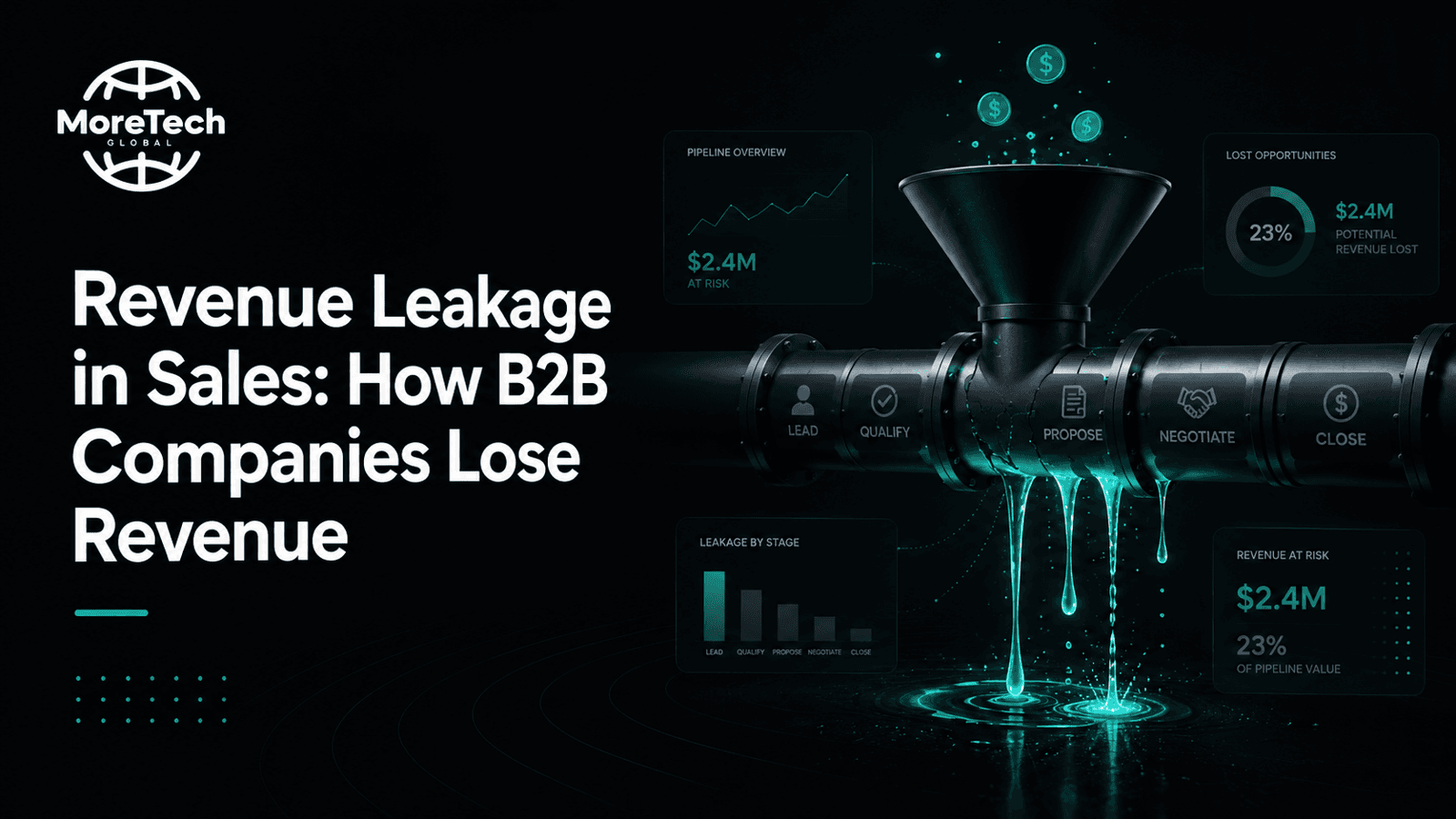
Revenue Leakage in Sales: The Silent Drain on Swedish VVS Contractors
When a plumbing or heating installation company answers a phone call, the expectation is that the inquiry will translate into a booked job and, eventually, cash on hand. In reality, many small VVS firms lose a measurable portion of that potential revenue every month because their sales process is still largely manual and reactive. This loss—known as revenue leakage in sales—is not just an abstract accounting term; it’s the reason why a 25‑person contractor can finish a year with a 10 % lower margin than a competitor that handles leads more efficiently.
The Anatomy of Revenue Leakage for VVS Installers
Revenue leakage occurs when earned income never reaches the top line. For VVS contractors, the most common culprits are:
- Delayed or missed responses to inbound inquiries – a call that goes unanswered or is returned after several days often results in the customer choosing another provider.
- Manual follow‑up gaps – when sales reps rely on spreadsheets or paper notes, they frequently forget to send quotes or schedule appointments within the optimal window.
- Inconsistent pricing and discounting – without a standardized price list, technicians may offer unapproved discounts that erode profit margins.
- Billing errors and late payments – incorrect invoices or delayed invoicing can push revenue into arrears, creating cash flow gaps even when jobs are completed.
According to LeakShield’s 2026 statistics, SaaS companies lose an average of 3–5 % of annual recurring revenue (ARR) to leakage. While VVS firms operate on a different scale, the same principle applies: every missed or delayed lead represents a percentage of potential income that never materializes.
Why Manual Lead Follow‑Up Is a Revenue Sinkhole
In the Swedish market, where competition among small installers is fierce and customer expectations for instant service are high, manual processes create a lag that competitors exploit. A typical scenario unfolds as follows:
- The customer calls or submits an online form.
- A receptionist logs the inquiry into a phone log or a simple spreadsheet.
- Within 24–48 hours, a technician checks the sheet and sends a quote by email.
- If the customer is impatient, they may cancel or switch to another contractor before receiving the quote.
This cycle can cost a firm up to 30 % of its administrative time, as highlighted in Why VVS Companies Lose Profitable Jobs—and How a Dedicated CRM Can Turn the Tide. The lost time translates directly into missed revenue opportunities.
A Decision Framework: From Inquiry to Invoice
To quantify and eliminate leakage, VVS contractors can adopt a simple five‑step framework that maps every touchpoint from initial contact to final payment. Use this as a checklist before implementing any technology solution.
- Capture: Log every inquiry in a central system (even a shared Google Sheet is better than paper).
- Qualify: Within 30 minutes, assign a technician and determine the job scope using a standardized questionnaire.
- Quote: Generate a price sheet that reflects approved rates and any applicable discounts; send it via SMS or email within 1 hour of qualification.
- Confirm: Follow up with a phone call to confirm acceptance; schedule the job in the technician’s calendar immediately.
- Invoice: Issue an invoice automatically upon job completion, linked to the original quote to avoid billing errors.
By measuring how many inquiries fail to progress through each stage, a contractor can pinpoint where leakage is highest and target process improvements accordingly.
Edge Cases That Amplify Leakage
- Seasonal spikes – During winter heating maintenance season, call volumes can double. If the follow‑up system isn’t scalable, the backlog grows faster than staff capacity.
- Multi‑location operations – When technicians are spread across several towns, coordinating schedules manually leads to missed appointments.
- Regulatory compliance – Certain Swedish plumbing regulations require documented proof of service. Manual record‑keeping can result in non‑compliance penalties that erode revenue indirectly.
Case Study: A Hypothetical 15‑Staff VVS Firm
Consider a contractor with 15 employees, generating €1 million in annual sales. If the firm experiences a 5 % leakage rate due to delayed responses and billing errors, that translates to €50 000 lost revenue each year—roughly the cost of hiring an additional technician.
“By automating lead capture and quote generation, we reduced our response time from 48 hours to under 5 minutes, cutting leakage by 70 %.” – Internal anecdote
Implementing a Low‑Cost Automation Layer
While full CRM systems can be expensive for small firms, a lightweight automation stack can deliver immediate ROI:
- Phone integration – Use a VoIP system that logs calls directly into a shared database.
- SMS/Email templates – Pre‑populate quotes and follow‑up messages to ensure consistency.
- Calendar sync – Connect technician schedules with the central booking system so appointments are auto‑confirmed.
- Invoice automation – Generate invoices from the same data source that created the quote, eliminating manual entry errors.
These components can be assembled using free or low‑cost tools (e.g., Google Workspace, Zapier, and a simple invoicing app). The key is to create a single source of truth that all staff can access in real time.
Measuring Success: Key Performance Indicators
After implementing the framework, track these metrics to ensure leakage is decreasing:
- Response Time – Average time from inquiry receipt to quote delivery.
- Quote Acceptance Rate – Percentage of quotes that convert into booked jobs.
- Billing Accuracy – Number of invoices requiring correction per month.
- Revenue Recovery Rate – Amount of previously lost revenue that is successfully recovered after process changes.
Regularly review these KPIs in a monthly dashboard; if any metric drifts, investigate the root cause and adjust the workflow accordingly.
Beyond Automation: Building a Culture That Cares About Revenue
Technology alone cannot eliminate leakage. It must be paired with a mindset that treats every lead as a potential revenue stream:
- Train staff on the importance of timely follow‑up.
- Reward technicians who consistently meet response targets.
- Encourage feedback loops where sales and service teams share insights about common bottlenecks.
This cultural shift ensures that process improvements are sustained over time, turning revenue leakage from a hidden cost into an opportunity for growth.
Further Reading on Optimizing Lead Management
- The Hidden Cost of Slow Response Times for VVS Companies
- Why VVS Companies Lose Profitable Jobs—and How a Dedicated CRM Can Turn the Tide
- Custom AI Agent Development Services: A Practical Guide to Building AI Workflows That Actually Do the Work
- Automated Business: How Small Businesses Can Work Smarter, Cut Costs, and Grow Without
Related reading
This is exactly what we build for you.
MoreTech turns the ideas in this article into a working system for your business — lead capture, instant follow-up, and automation that runs itself.
People Also Read

2 September 2026
AI Follow-Up Automation: Faster Follow-Up Without Sounding Robotic
AI Follow‑Up Automation: Faster Outreach Without the Robot Voice When a Swedish VVS contractor answe...
Read article
2 September 2026
AI Sales Agent vs Human SDR: Where Does Each One Win?
AI Sales Agent vs Human SDR: Where Each One Wins When a Swedish VVS contractor receives an inbound c...
Read article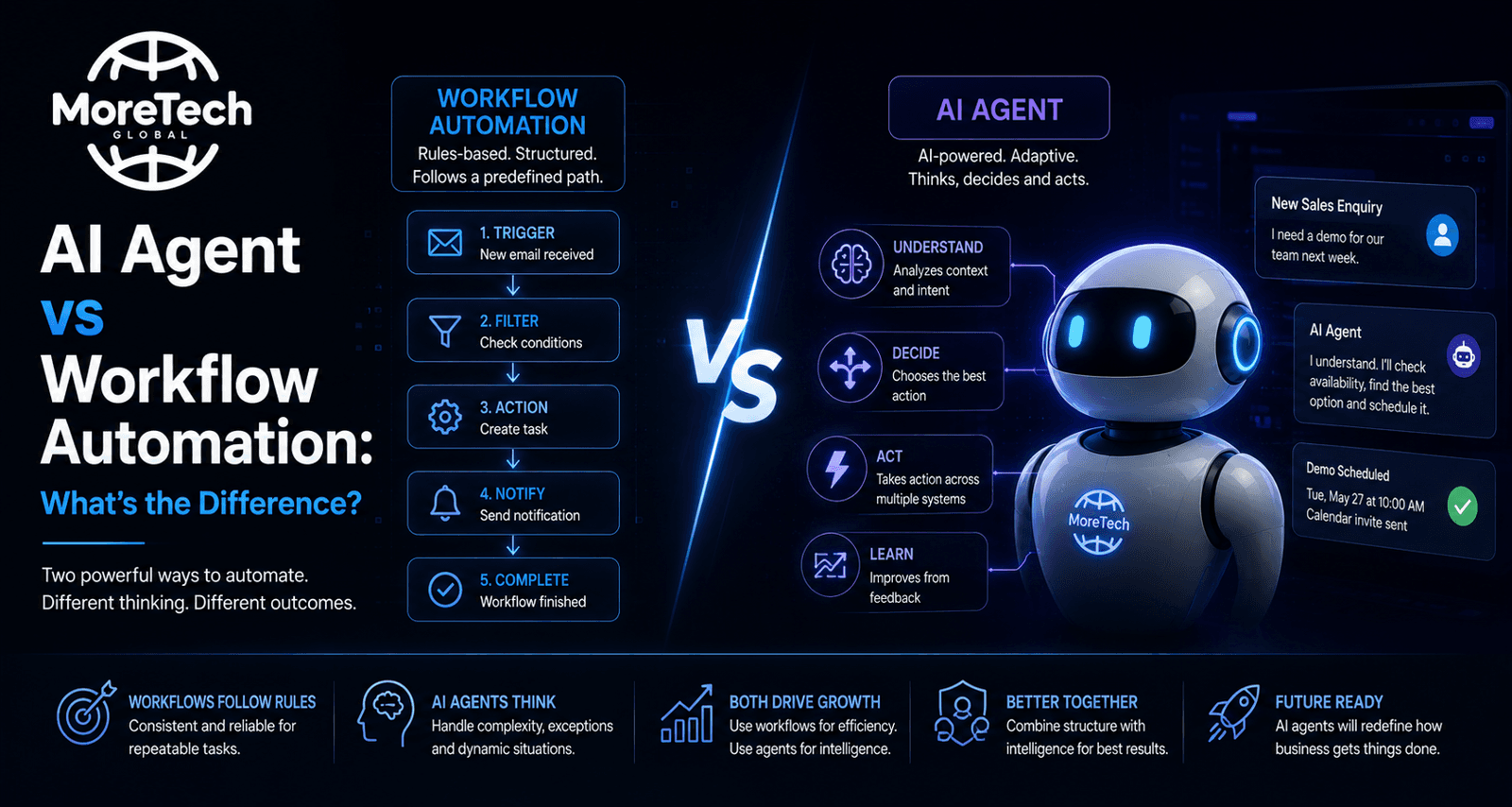
1 September 2026
AI Agent vs Workflow Automation: What's the Difference?
AI Agent vs Workflow Automation: What Small VVS Contractors Should Know When a Swedish plumbing inst...
Read article