
Article Brief
Discover how AI CRM automation transforms raw data into actionable insights, automates follow‑ups, and integrates with marketing tools to cut revenue leakage
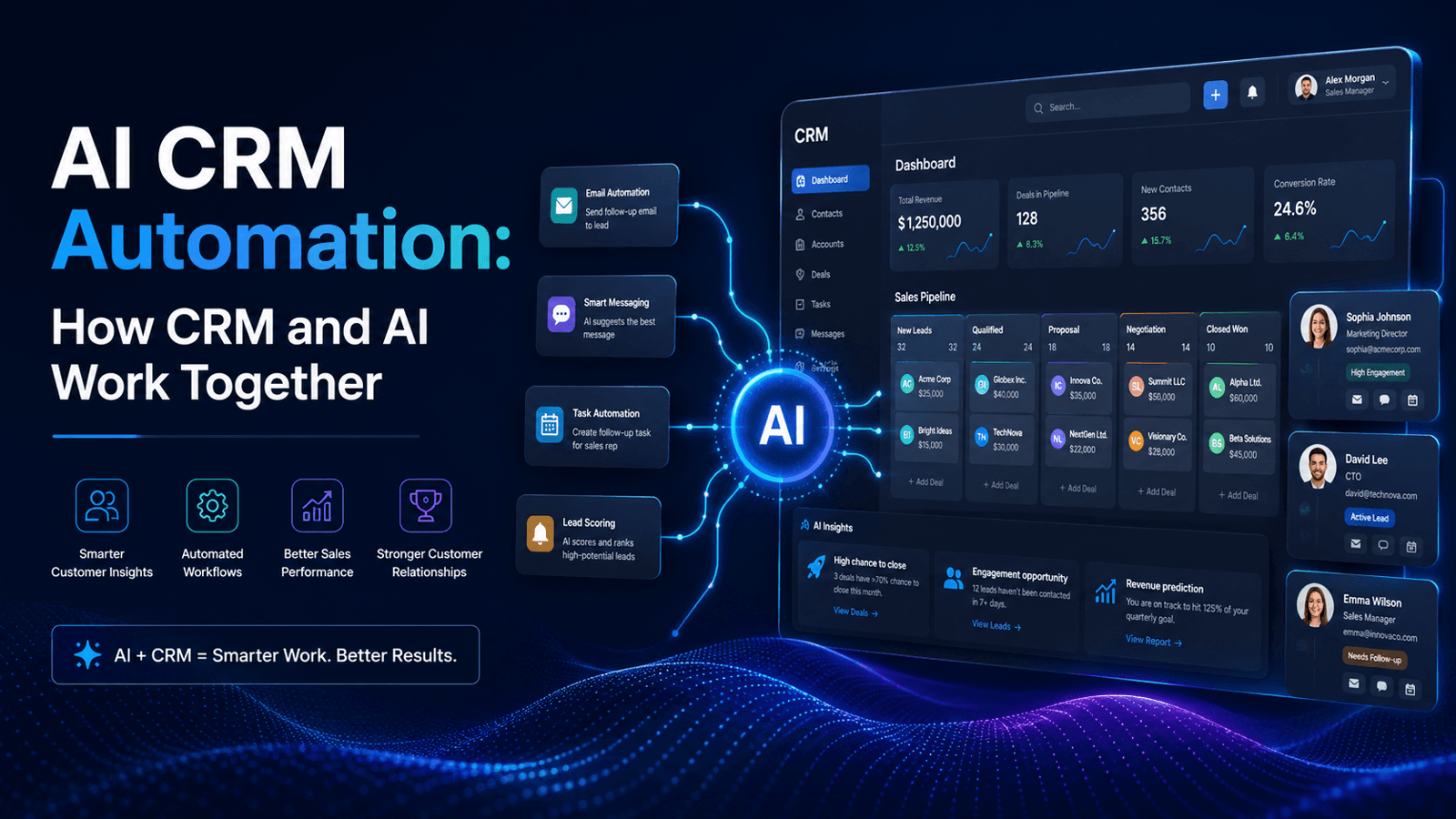
AI CRM automation is reshaping how businesses manage customer relationships by turning data into actionable insights, freeing teams from repetitive tasks so they can focus on high-value strategy.
Smart Data Analysis for Sales Teams
Smart Data Analysis for Sales Teams
Modern AI CRM automation turns raw spreadsheets and dashboards into actionable insights by applying pattern‑recognition algorithms to every cell of your pipeline data. Instead of a sales leader manually scrolling through dozens of rows, the system flags anomalies—such as a sudden drop in close rates for a specific product line or an unexpected spike in deal size within a region—within seconds.
When a new opportunity enters the CRM, AI cross‑references historical win/loss data, market trends, and even external signals like economic indicators. It then assigns a confidence score to each stage of the funnel, allowing leaders to prioritize follow‑ups that statistically have the highest probability of closing. For example, if the model detects that deals in the “Negotiation” stage with a particular account type historically convert 30% faster when a senior executive is involved, it can automatically surface that insight and suggest scheduling a high‑level call.
Decision frameworks become data‑driven: leaders choose between aggressive outreach or strategic patience based on real‑time probability curves. Trade‑offs are clear—high‑confidence alerts may still miss niche opportunities, so teams should calibrate thresholds to balance speed with accuracy. Edge cases arise when new product launches skew historical patterns; in such scenarios, the AI can flag “unknown” segments and prompt a manual review.
By automating these analyses, sales leaders gain instant pipeline visibility that would otherwise require hours of manual effort, freeing them to focus on high‑leverage conversations. For deeper insights into revenue leakage, see Revenue Leakage in Sales: How B2B Companies Lose Revenue.
Automated Follow‑Up & Email Drafting
Automated Follow‑Up & Email Drafting
When a prospect opens an email or clicks a link, the AI engine captures that event and immediately generates a personalized follow‑up draft. It pulls context from the CRM—previous interactions, deal stage, product interest—and uses natural language generation to craft a message that feels hand‑written yet is produced in seconds.
- Trigger Capture: A webhook from the email platform sends an event (open, click, reply) to the AI module.
- Contextual Analysis: The system queries the CRM for recent notes, attached documents, and the prospect’s industry. It also checks the last touchpoint date to avoid redundancy.
- Email Drafting: Using a pre‑trained language model fine‑tuned on your company’s tone, the AI writes a concise follow‑up that references the specific link clicked or attachment opened.
- Reminder Scheduling: If no reply is received within 48 hours, the AI schedules a reminder for the assigned rep and logs an activity in the CRM. The reminder includes a suggested next step (e.g., “Ask about budget constraints”).
- Approval & Send: The draft lands in the rep’s inbox with a single click to send or edit. A/B test variants can be automatically generated for high‑volume accounts.
This workflow reduces manual drafting time by up to 70 % and ensures that follow‑ups are timely, context‑rich, and consistent—key factors in closing deals faster. For example, a small advisory firm might set the AI to send a “quick check‑in” after a proposal is viewed, then trigger a calendar invite if no response arrives within two days.
By automating both drafting and reminder logic, teams can focus on high‑value conversations while the system handles the repetitive cadence that often leads to revenue leakage. Learn how missed follow‑ups cost you money.
CRM vs. Marketing Automation: Where They Overlap
CRM vs. Marketing Automation: Where They Overlap
Both CRM and marketing automation systems aim to streamline customer interactions, yet they serve distinct purposes. A CRM focuses on capturing every touchpoint—sales calls, support tickets, contract renewals—and maintaining a single source of truth for the entire customer lifecycle. Marketing automation, by contrast, is engineered to nurture prospects through content delivery, lead scoring, and campaign orchestration.
When integrated, these platforms create a feedback loop: marketing triggers a drip sequence based on a lead’s engagement score; the CRM logs each interaction, updating the opportunity stage. For example, a B2B firm might use marketing automation to send a webinar invitation to prospects with a high intent score; once the prospect registers, the CRM automatically creates a new contact record and assigns it to the appropriate sales rep.
Key differences emerge in data granularity and workflow complexity. CRMs excel at transactional data—deal size, close date, renewal terms—while marketing automation shines with behavioral metrics such as page views, email opens, and click-through rates. Decision makers should evaluate whether their primary need is to manage sales pipelines or to execute multi-touch nurturing campaigns.
In practice, the overlap is most valuable when a lead qualification workflow begins in marketing automation (e.g., score threshold reached) and then hands off to the CRM for opportunity creation. This ensures that only high-quality leads consume sales resources, reducing revenue leakage—see our guide on Revenue Leakage in Sales for deeper insights.
Choosing the Best Autonomous AI CRM Tool of 2026
Choosing the Best Autonomous AI CRM Tool of 2026
When evaluating autonomous AI CRMs, start with a decision framework that balances automation depth, integration flexibility, and scalability for growth. First, assess how each platform handles core sales workflows: lead research, qualification, data entry, and follow‑up. Look for no‑code triggers—such as Calendly or Airtable integration—that enable a seamless handoff from prospecting to pipeline management.
Second, examine the AI’s analytical capabilities. A robust system should surface actionable insights without requiring manual spreadsheet work, enabling sales leaders to spot trends instantly (see Insightly’s AI‑CRM blog). Third, evaluate the platform’s ability to draft context‑aware emails and responses; this reduces repetitive typing while maintaining personalization.
Top-rated autonomous tools in 2026 include:
- Tool A – excels at end‑to‑end lead qualification with a drag‑and‑drop workflow builder.
- Tool B – offers advanced predictive scoring and integrates natively with Airtable for data capture.
- Tool C – provides AI‑generated email drafts that adapt to the prospect’s industry tone.
Real‑world success stories illustrate these benefits. A mid‑size B2B firm adopted Tool B, reducing manual data entry by 70% and cutting response times from days to hours, which directly lifted close rates (source: YouTube demo). Another company leveraged Tool C’s email drafting feature to maintain a 95% open rate on outreach campaigns.
Finally, consider the vendor’s support ecosystem. A responsive help desk and an active community can accelerate onboarding and troubleshoot edge cases—critical when scaling operations or integrating with legacy financial systems.
For teams concerned about revenue leakage, this checklist offers a practical audit to ensure your chosen AI CRM aligns with revenue‑protective workflows.
Sources
- AI and the Future of CRM: 7 Ways to Stay Ahead
- How AI-powered CRMs prioritize leads in real time
- AI Sales Pipeline Management Software | Boost Revenue by 30% in 2026
- AI for Email and Content Drafting on a Budget - LinkedIn
- The 6 Best Autonomous AI CRM Tools in 2026 | Zapier
Related reading
This is exactly what we build for you.
MoreTech turns the ideas in this article into a working system for your business — lead capture, instant follow-up, and automation that runs itself.
People Also Read
2 September 2026
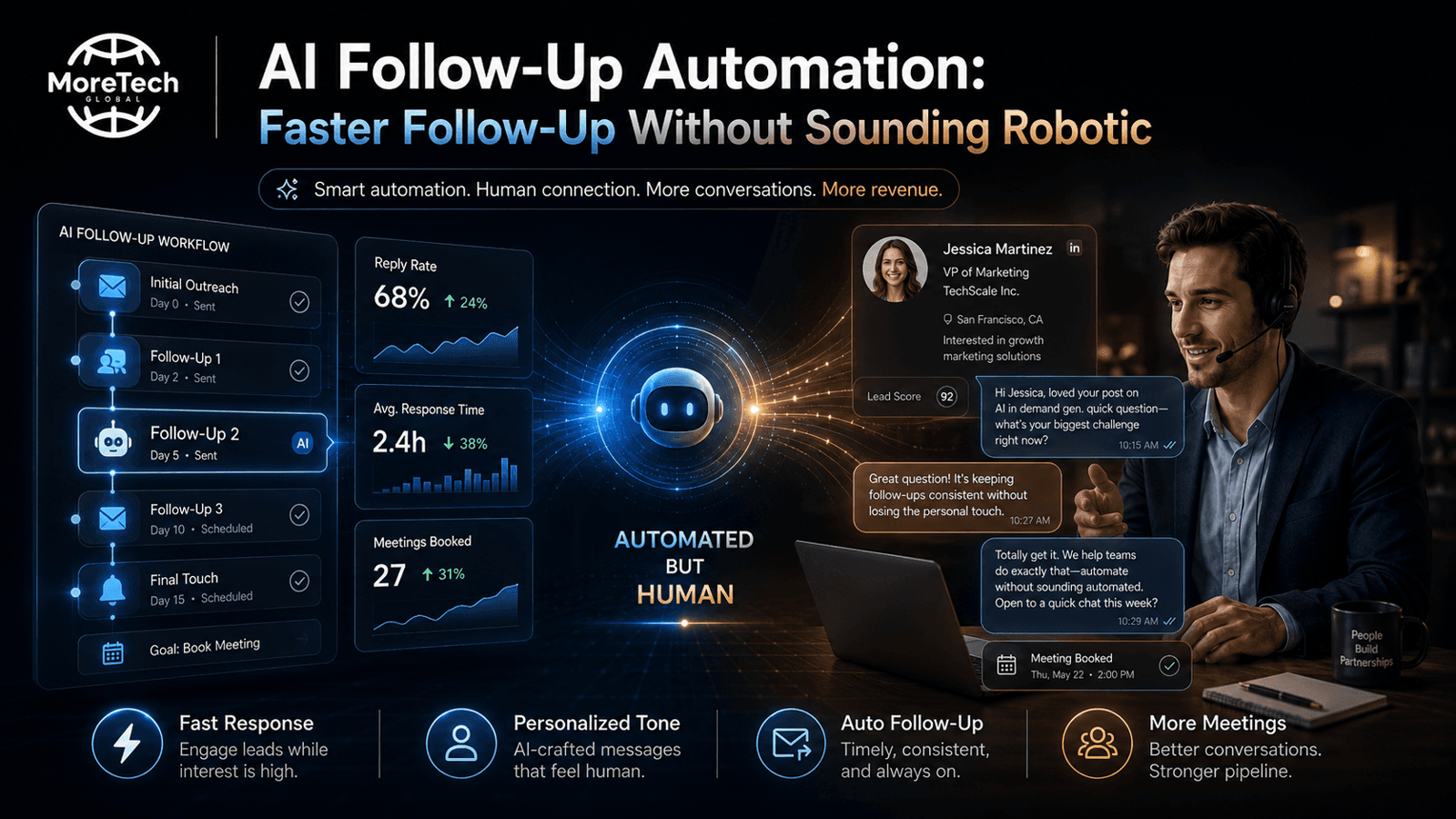
AI Follow-Up Automation: Faster Follow-Up Without Sounding Robotic
AI Follow‑Up Automation: Faster Outreach Without the Robot Voice When a Swedish VVS contractor answe...
Read article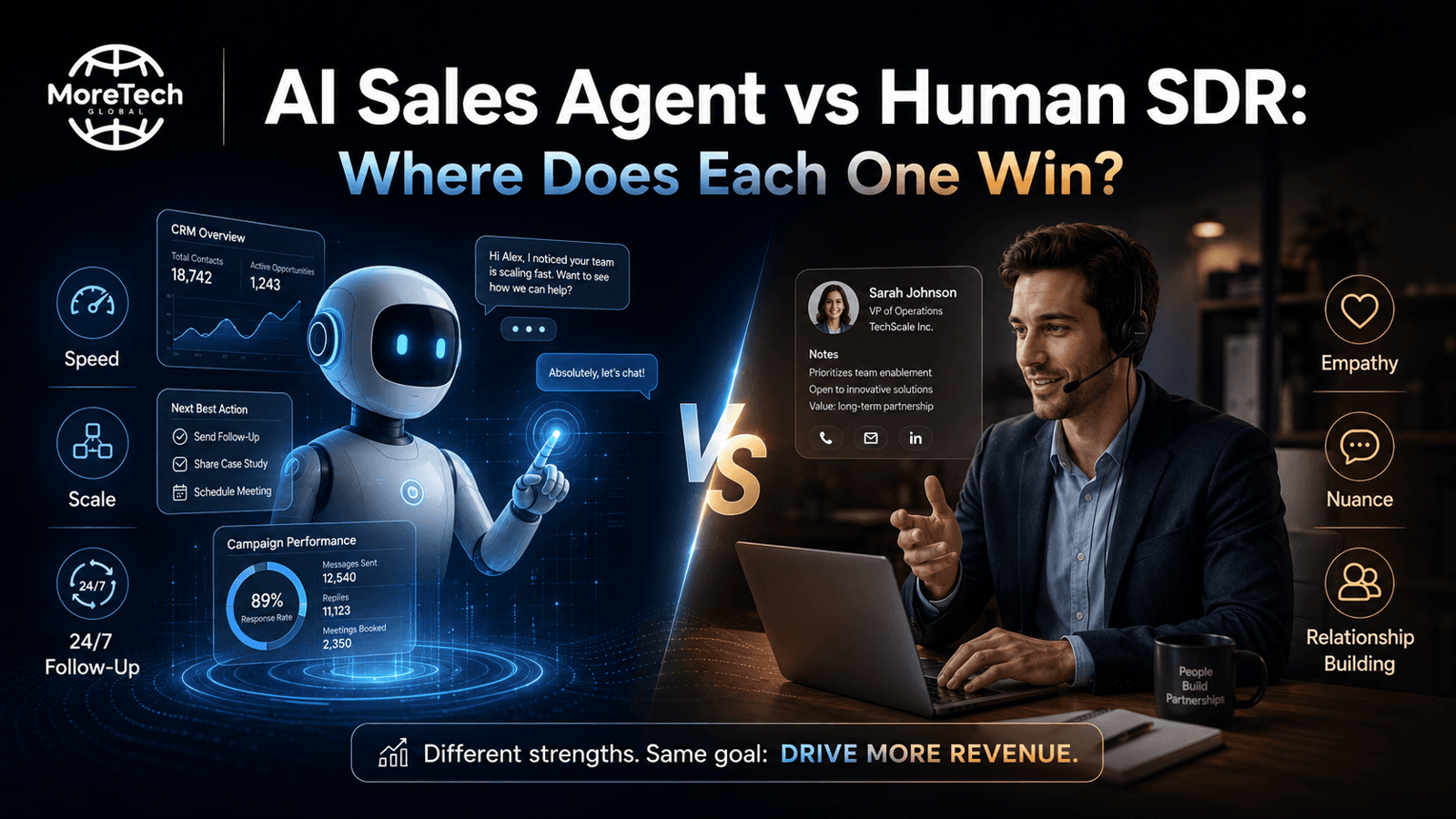
2 September 2026
AI Sales Agent vs Human SDR: Where Does Each One Win?
AI Sales Agent vs Human SDR: Where Each One Wins When a Swedish VVS contractor receives an inbound c...
Read article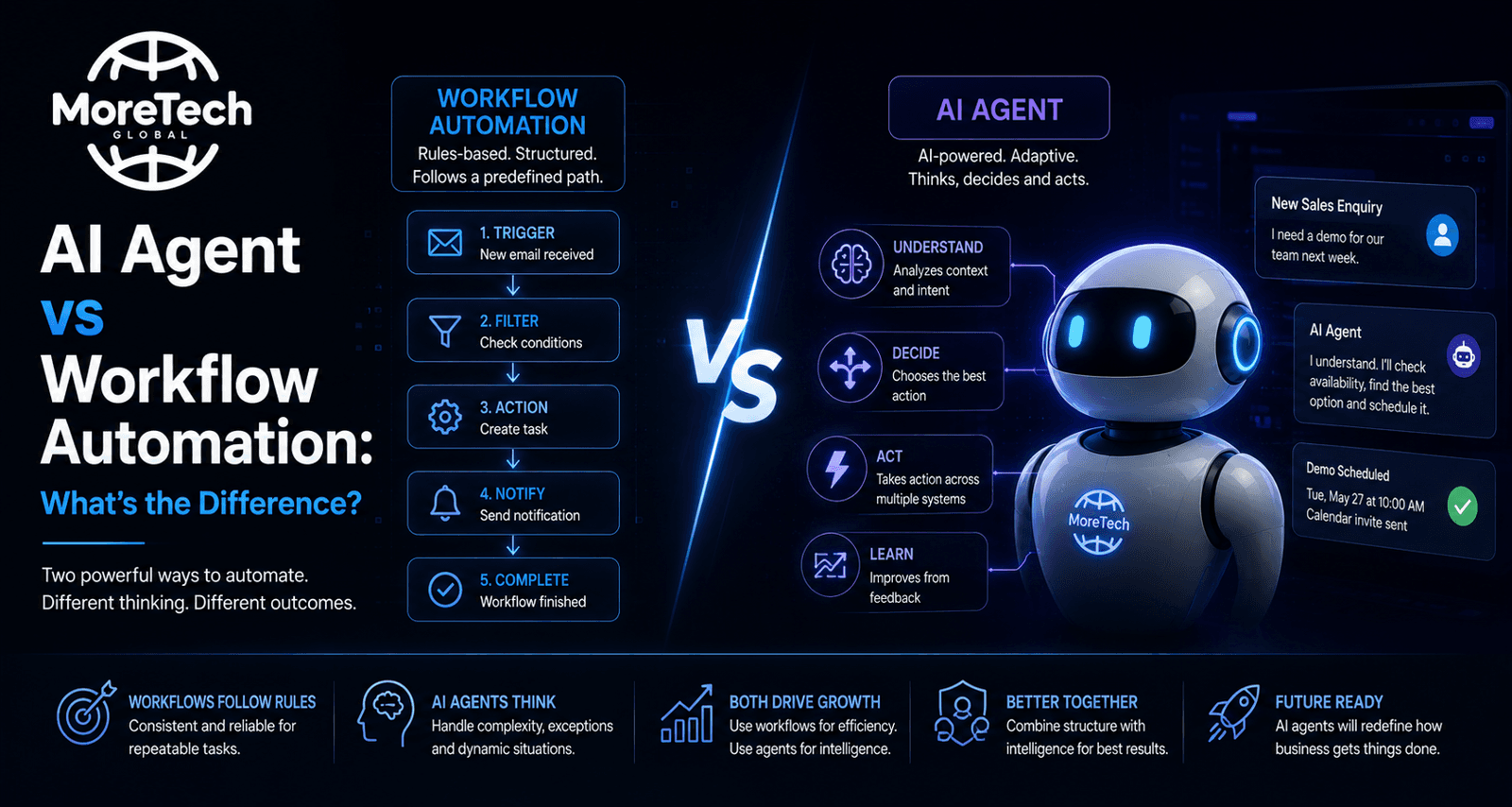
1 September 2026
AI Agent vs Workflow Automation: What's the Difference?
AI Agent vs Workflow Automation: What Small VVS Contractors Should Know When a Swedish plumbing inst...
Read article