
Artikelöversikt
Learn how IT outsourcing helps small businesses access support, help desk services, offshore development teams, and outsourced web development without losing control.
Article Brief
IT outsourcing helps small businesses access technical support, help desk operations, development talent, web development capacity, and specialist expertise without building a full internal team too early. The best results happen when outsourcing is treated as a managed partnership with clear scope, service levels, documentation, communication, security rules, and performance tracking - not as a quick way to throw tasks over the fence and hope for the best.

Figure 1. A small business owner and IT outsourcing consultant reviewing support tickets, dashboards, and priorities before deciding what should stay internal and what can be outsourced.
IT Outsourcing for Small Businesses: Build Faster, Support Better, and Keep Control
IT outsourcing means hiring an external partner to handle selected IT functions, technical support, software development, web development, infrastructure work, or help desk operations. For small businesses, it can be the difference between “we are stuck again” and “someone already fixed it before lunch.”
Let’s keep this simple. You do not outsource because it sounds modern. You outsource because your business needs reliable technical capacity, but hiring every role internally is too slow, too expensive, or simply not practical yet.
A small business may need outsourcing IT support for daily troubleshooting. A startup may need an outsourced development team to build a product. A growing company may need an outsourced web development team to improve its website, CRM, integrations, and reporting. A healthcare provider may need healthcare IT outsourcing with extra care around privacy, access, and reliability.
The real goal is not to replace your business brain with an outside vendor. The goal is to build a stronger operating system around your company. That is where MoreTechGlobal’s AI-powered growth systems become relevant: the company helps businesses outsource development and build systems around lead generation, CRM tracking, AI workflows, reporting, automation, and custom software when off-the-shelf tools are not enough.
The Problem: Small Teams Are Expected to Run Like Big Companies
Most small businesses do not have a “lazy team” problem. They have a capacity problem.
The founder is checking website issues. The operations manager is chasing app bugs. The sales team is asking why the CRM is not updating. Someone’s email stops working right before a client call. A developer is fixing a payment bug while also being asked to update a landing page, connect analytics, review security, and maybe perform a small miracle before Friday.
We have all seen this movie. The budget is tight, the work is real, and the internal team is already stretched. Hiring a full-time help desk agent, DevOps engineer, web developer, backend developer, QA tester, product designer, and CRM specialist is not always realistic.
That is why IT outsourcing for small businesses has become a practical option. It gives companies access to specialists without forcing them to build a complete internal department before the business is ready. Recent IT outsourcing and help desk guides commonly highlight the same themes: cost control, access to expertise, scalability, support coverage, risk management, and choosing the right partner rather than just the cheapest provider.
Here is the honest part: outsourcing can solve real problems, but only if the relationship is structured properly. Poor communication, unclear scope, weak ownership, and loose security habits can turn a good idea into a very polite disaster.
What IT Outsourcing Actually Covers
IT outsourcing can mean many things. That is why businesses often get confused. One company says it offers “managed IT.” Another offers “offshore IT outsourcing.” Another sells a “developers outsourcing dedicated team.” Another offers “outsourcing IT help desk.” These are related, but they are not the same thing.
Think of IT outsourcing as a menu, not a single dish. You choose the support model based on what your business needs right now and what it will need next.
| Outsourcing Area | What It Usually Includes | Best Fit |
| IT help desk outsourcing | Ticket handling, login issues, device support, employee troubleshooting, documentation, escalation rules, response tracking. | SMBs that need faster support without hiring a full internal help desk. |
| Outsourcing IT support | System maintenance, user support, basic security, cloud accounts, software setup, monitoring, vendor coordination. | Companies with recurring IT issues but no full internal IT department. |
| Outsourced development team | Frontend, backend, QA, DevOps, product support, sprint delivery, API integrations, custom software development. | Startups and growing companies building software products or internal systems. |
| Outsourced web development team | Conversion-focused websites, landing pages, CMS builds, web apps, integrations, performance improvements. | Businesses that need website and application delivery without expanding the internal team. |
| Offshore IT outsourcing | Remote technical talent or teams in another country, often for cost-effective development, support, or operations. | Companies that can manage documentation, communication, security, and time-zone overlap. |
| Healthcare IT outsourcing | Healthcare support, patient systems, access management, telehealth workflows, reporting, compliance-aware support. | Clinics, healthtech companies, and healthcare providers with sensitive data and reliability needs. |
The Solution: Outsource the Right Work, Not All the Work
The mistake most people make is thinking outsourcing means handing everything away. That is usually where trouble starts.
A better approach is to separate the work into three buckets: keep, outsource, and partner closely.
| Work Type | What to Do | Example |
| Keep internal | Anything tied to core strategy, brand decisions, customer relationships, product vision, or sensitive leadership judgment. | Your offer, pricing logic, customer promise, product priorities, and growth direction. |
| Outsource with process | Repeatable technical work that can be documented, measured, and supported by service levels. | Help desk tickets, website fixes, QA checks, routine integrations, monitoring, support documentation. |
| Partner closely | Complex technical work where the outside team needs business context and regular collaboration. | Custom software, CRM workflows, AI agents, lead tracking, dashboards, product development, API architecture. |
This is where MoreTechGlobal’s services fit naturally. The company does not only offer technical delivery. Its positioning connects software development outsourcing, custom web development, CRM automation, AI workflows, reporting and optimization, and business process automation into a practical growth system. That matters because outsourced technical work becomes far more useful when it is connected to sales, operations, and performance visibility.
IT Outsourcing vs Hiring In-House
Hiring in-house is not bad. In many cases, it is the right move. The question is timing.
If a business has a stable long-term workload, a clear role, enough management capacity, and the budget to hire well, internal hiring can be smart. But if the workload changes every month, the company needs multiple skills, or the business is still validating its systems, outsourcing may be more practical.
| Option | Strengths | Risks | Best When |
| In-house team | High context, direct control, deep company knowledge. | Fixed salary cost, hiring delays, limited skill coverage, management overhead. | The role is core, full-time, and long-term. |
| Freelancers | Flexible, fast for small tasks, often affordable. | Availability risk, inconsistent process, limited accountability for complex systems. | The work is small, clearly scoped, and low risk. |
| Outsourced provider | Structured support, broader skills, predictable process, scalability. | Requires scope clarity, vendor management, communication discipline. | The business needs reliable delivery without building every role internally. |
| Dedicated outsourced team | Works like an extension of your team, supports ongoing product delivery, flexible capacity. | Needs strong product ownership, sprint habits, documentation, and trust. | The company has ongoing development needs and wants a long-term technical partner. |

Figure 2. An outsourced development team reviewing code together, showing how dedicated external engineers can work like an extension of the internal product team.
Outsourcing IT Help Desk: The Quiet Productivity Win
Outsourcing IT help desk support is often one of the first outsourcing moves for small businesses because the pain is easy to feel. When people cannot log in, access tools, fix email issues, connect devices, or resolve software problems, the business slows down.
The problem is not always dramatic. Sometimes it is just ten small issues every week quietly stealing attention. A password reset here. A laptop problem there. A CRM login issue. A payment tool error. A printer doing printer things, because apparently printers have chosen chaos as a lifestyle.
A good outsourcing IT help desk setup should include response-time targets, escalation paths, ticket categories, user documentation, knowledge base articles, recurring issue tracking, and clear reporting.
The goal is not only to “answer tickets.” The goal is to reduce repeated friction so the team can focus on work that moves the business forward.
- Faster response to common user problems
- Less interruption for managers and founders
- Better documentation of recurring issues
- Clearer escalation for serious technical problems
- Predictable support coverage without hiring a full help desk team
- More visibility into what keeps breaking and why
For companies already using MoreTechGlobal’s CRM and lead tracking systems, a support workflow can also connect to customer status, internal tasks, or follow-up rules. That is where help desk work starts becoming part of a larger business system instead of a separate inbox full of headaches.
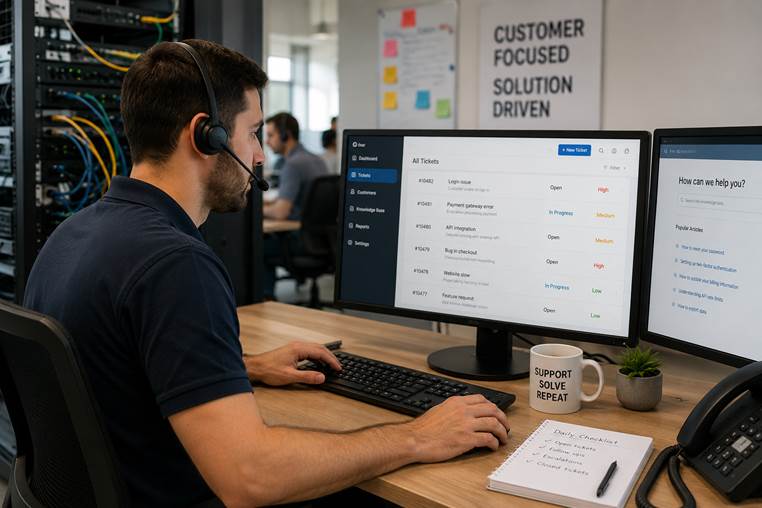
Figure 3. Outsourcing IT help desk support can reduce daily troubleshooting pressure when tickets, documentation, and response rules are managed properly.
Outsourcing IT Support for Small Businesses
Outsourcing IT support is broader than help desk work. It may include software setup, cloud accounts, access controls, backups, basic security, system monitoring, tool configuration, user onboarding, and vendor coordination.
For small businesses, the main benefit is not just cost saving. It is coverage. One internal “tech person” can only know so much. A structured support partner can bring multiple skills: support, cloud, security, development, website maintenance, automation, and reporting.
This matters because a modern small business is not running on one tool anymore. It may rely on a website, CRM, email automation, payment tools, analytics, cloud storage, booking systems, help desk software, dashboards, and AI tools. When something breaks between those systems, the team needs someone who understands the connections.
That is why MoreTechGlobal’s tech consulting and digital strategy is relevant. IT support should not stop at “we fixed the login.” It should help the business understand whether the system is stable, scalable, secure, and useful.
Offshore IT Outsourcing: Useful, But Not Magic
Offshore IT outsourcing can help companies access technical talent at a more flexible cost. It can also help extend development capacity, speed up delivery, and support longer working hours across regions.
But here is where many businesses get stuck: offshore does not mean effortless. Time zones, communication habits, documentation, ownership, quality control, and security rules matter more, not less.
A 2026 study on global software development found that temporal distance can affect success, quality, project management effort, schedules, and communication. In plain English: the farther apart people work, the more discipline the process needs. That does not make offshore bad. It means “just send it to the team overseas” is not a strategy.
A better approach to offshore IT outsourcing includes:
- A clear product owner on the client side
- Written scope and acceptance criteria
- Daily or near-daily communication rhythm
- Shared project board and sprint priorities
- Time-zone overlap for important discussions
- Code review and QA process
- Security rules for accounts, credentials, repositories, and data
- Simple reporting so progress is visible without chasing people
MoreTechGlobal’s Sweden-Nepal setup is useful in this context because it blends business-side strategy with development execution. For clients, that can feel more practical than hiring isolated developers and trying to manage every technical detail alone.
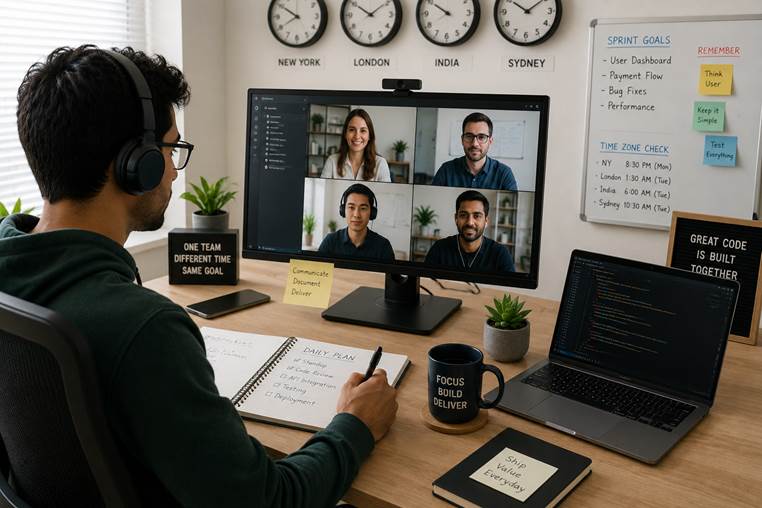
Figure 4. Offshore IT outsourcing works best when remote teams have clear sprint goals, time-zone overlap, documentation, and communication habits.
Outsourced Development Team: When You Need More Than Support
An outsourced development team is different from general IT support. Support keeps systems running. Development builds or improves the systems themselves.
A startup may use an outsource development team to build an MVP. A SaaS company may need backend, frontend, QA, and DevOps capacity. A service business may need a custom portal. A logistics company may need routing visibility. A sales team may need CRM integrations. A retailer may need a web app that connects orders, customer data, and reporting.
This is where a developers outsourcing dedicated team model can make sense. Instead of hiring one developer and hoping that person can do everything, the company gets a team structure that can include roles like:
- Product manager or delivery lead
- UI/UX designer
- Frontend developer
- Backend developer
- QA tester
- DevOps or cloud engineer
- Automation or AI workflow specialist
- Data/reporting specialist
You do not always need every role from day one. A good partner helps you choose what is needed for the first phase. The goal is not to look impressive in a project proposal. The goal is to ship something useful without creating technical debt that follows you around like a very loyal but annoying dog.
For MoreTechGlobal clients, an outsourced development team can connect development work to conversion-focused websites, lead generation funnels, CRM systems, marketing automation, and growth reporting. That connection is important because software should support the business model, not sit beside it like an expensive decoration.
Outsourced Web Development Team: Website, Web App, or Growth System?
An outsourced web development team can build landing pages, marketing websites, web apps, customer portals, admin dashboards, ecommerce features, API integrations, performance improvements, and analytics setups.
But not every web development project is the same. A simple website and a business-critical web app need different planning.
| Project Type | What It Needs | Outsourcing Advice |
| Marketing website | Clear messaging, fast pages, mobile design, SEO basics, conversion paths. | Use a focused web team with strong design and performance habits. |
| Lead generation site | Forms, CRM connection, email nurture, analytics, conversion tracking. | Choose a team that understands growth systems, not only visuals. |
| Web app | User accounts, database, roles, payments, workflows, QA, support. | Use a development team with architecture and testing discipline. |
| Customer portal | Secure login, customer data, documents, status updates, notifications. | Prioritize security, UX, integrations, and support ownership. |
| Internal dashboard | Data sources, reporting, permissions, business logic, automation. | Make sure data accuracy and stakeholder needs are mapped first. |
This is why MoreTechGlobal’s emphasis on growth systems that convert matters. A website should not only look good. It should connect to the funnel, CRM, follow-up, automation, and reporting. Otherwise, it becomes a beautiful brochure that nobody can measure.

Figure 5. A mature outsourced web development team needs delivery discipline: code review, testing, deployment planning, and clear ownership of quality.
Healthcare IT Outsourcing: Extra Care, Extra Rules
Healthcare IT outsourcing deserves its own section because healthcare is not a casual environment. Access, privacy, uptime, documentation, patient trust, and compliance-aware workflows matter.
A healthcare provider may outsource IT support, telehealth setup, patient portal development, appointment workflows, reporting dashboards, secure access management, or help desk support. A healthtech company may need product developers, QA testers, infrastructure support, and data-security planning.
The key question is not simply “Can the provider build it?” It is “Can the provider build and support it responsibly?”
- Who can access patient or customer data?
- How are accounts created and removed?
- Are audit logs available?
- How are incidents reported?
- What happens during downtime?
- How is sensitive information protected?
- Who owns documentation and training?
For healthcare, outsourcing IT support must be paired with clear security expectations. If the workflow touches sensitive information, the outsourcing partner should understand access control, role-based permissions, backups, documentation, and accountability.
What to Outsource First
You do not need to outsource everything at once. In fact, please do not. That is how businesses create confusion with a contract attached to it.
Start with the work that is repeated often, slows the team down, and can be clearly described.
| If This Is Happening | Outsource This First | Why It Helps |
| Employees constantly need basic tech help. | Help desk and user support. | Reduces interruptions and creates a support process. |
| The website needs regular fixes and updates. | Outsourced web development team. | Keeps the site stable, fast, and conversion-ready. |
| Product delivery is too slow. | Outsourced development team. | Adds engineering capacity without long hiring cycles. |
| CRM, forms, and follow-up are disconnected. | CRM automation and integrations. | Improves lead handling and reporting. |
| Reports are manual or unreliable. | Analytics and dashboard support. | Gives leadership better visibility. |
| Technical debt is growing. | Code review, QA, and architecture support. | Stops small shortcuts from becoming expensive problems. |
How to Choose an IT Outsourcing Partner
Choosing an IT outsourcing partner is not just about price. Price matters, of course. Nobody wants a budget surprise wearing a nice suit. But the cheapest option can become expensive if the team creates delays, breaks trust, ignores documentation, or disappears when something important fails.
Use this checklist before signing:
- Do they understand your business model, not only the task list?
- Can they explain their process clearly?
- Do they offer support, development, QA, and maintenance where needed?
- How do they manage communication and time zones?
- What tools do they use for tickets, sprint boards, documentation, and reporting?
- Who owns the code, credentials, documentation, and deliverables?
- How do they handle security and access?
- What is included in support after launch?
- How are changes, bugs, and urgent issues handled?
- Can they scale the team up or down without chaos?
A strong provider should make the work clearer. If the first few conversations already feel confusing, the project will probably not become magically simple later.
Metrics That Prove Outsourcing Is Working
Outsourcing should be measured. Otherwise, everyone ends up discussing feelings, and feelings are not a great project dashboard.
The right metrics depend on the service, but these are useful starting points:
| Outsourcing Area | Metrics to Track |
| Help desk | First response time, resolution time, ticket volume, recurring issue count, satisfaction score, escalation rate. |
| IT support | Downtime, onboarding time, security incidents, tool availability, recurring support themes. |
| Development team | Sprint completion, bug rate, deployment frequency, code review quality, QA pass rate, cycle time. |
| Web development | Page speed, conversion rate, form completion, uptime, SEO health, analytics accuracy. |
| CRM and automation | Lead response time, follow-up completion, pipeline visibility, duplicate data reduction, reporting accuracy. |
This connects directly with MoreTechGlobal’s reporting and optimization services. Outsourcing is easier to trust when the business can see what is being done, what is improving, and where the next bottleneck lives.
Common IT Outsourcing Mistakes
Even good outsourcing ideas fail when the setup is weak. Here are the mistakes worth avoiding.
Mistake 1: Outsourcing Without Clear Ownership
Someone inside your business still needs to own priorities. An outsourcing partner can deliver, advise, and support, but they should not guess your business strategy from scattered messages.
Mistake 2: Choosing Only by Hourly Rate
Low hourly rates can look attractive. But if the work takes twice as long, creates more bugs, or needs to be rebuilt, the rate was not cheap. It was just the first payment.
Mistake 3: No Documentation
Documentation is not glamorous. Neither is brushing your teeth. Both prevent painful problems later. Document systems, credentials, workflows, environments, deployment steps, and recurring support processes.
Mistake 4: No Security Rules
Access should be intentional. Use role-based accounts, password managers, two-factor authentication, access reviews, and clear offboarding. This matters even more in healthcare IT outsourcing and support environments with sensitive data.
Mistake 5: Treating Outsourcing Like a One-Time Task Dump
Good outsourcing is a relationship with process. It needs communication, feedback, reporting, and improvement. If you only send random tasks with no context, you will get random results with invoices attached.
Why MoreTechGlobal Fits IT Outsourcing and Development Support
MoreTechGlobal is a practical fit for companies that need outsourced technical capacity connected to business growth. The company helps businesses outsource development and build robust growth systems, automation, and performance-driven solutions.
That is important because many businesses do not only need a developer. They need a developer who understands the funnel. They do not only need IT support. They need systems that reduce friction. They do not only need a website. They need a website connected to CRM, lead tracking, email nurture, reporting, and follow-up.
For example, a business can use MoreTechGlobal’s lead generation systems to attract the right audience, CRM + KYC + lead tracking to organize prospects, email automation and nurture to follow up consistently, AI agents and workflows to reduce repetitive tasks, and reporting and optimization to understand what is working.
That connected approach supports startups, SMEs, retailers, service businesses, SaaS companies, hospitality teams, education providers, logistics companies, healthcare teams, and other growth-focused companies that need technology to make work easier, not more complicated.
If your company is trying to decide whether to hire internally, use an outsourced development team, improve outsourcing IT support, or build a stronger outsourced web development team, the practical next step is not a giant commitment. It is a focused discovery process: map the system, identify the bottleneck, define the first useful scope, then build from there.
IT Outsourcing Readiness Checklist
- We know which work is repeated, urgent, or slowing the team down.
- We have a clear internal owner for outsourcing decisions.
- We can describe the first scope in plain language.
- We know which systems, tools, and accounts are involved.
- We have basic security expectations for access and data.
- We know what success should look like in 30, 60, and 90 days.
- We have a communication rhythm for support or development updates.
- We want a partner that improves systems, not just a vendor that accepts tickets.
FAQ
What is IT outsourcing?
IT outsourcing is the practice of hiring an external partner to manage selected technology functions, such as help desk support, software development, web development, cloud support, infrastructure, QA, monitoring, or technical consulting.
Is IT outsourcing good for small businesses?
Yes, IT outsourcing can be useful for small businesses when they need technical support or development capacity but cannot justify hiring every role internally. The key is to start with clear scope, security rules, and measurable outcomes.
What is outsourcing IT help desk?
Outsourcing IT help desk means an external team handles technical support tickets, troubleshooting, user issues, documentation, and escalation. It helps reduce interruptions for internal teams and gives employees a clearer support path.
What is the difference between outsourcing IT support and outsourcing development?
IT support keeps systems running and helps users solve technical problems. An outsourced development team builds or improves software, websites, integrations, dashboards, and digital products.
What is an outsourced development team?
An outsourced development team is an external group of specialists who work on your software or web project. It may include developers, QA testers, designers, DevOps engineers, product leads, and automation specialists.
Is offshore IT outsourcing risky?
It can be risky if communication, documentation, security, and ownership are weak. It can work very well when the client and provider agree on process, time-zone overlap, sprint rhythm, access rules, and quality standards.
When should a company outsource IT support?
A company should consider outsourcing IT support when recurring technical issues are slowing the team down, internal staff are stretched, or the business needs reliable support without hiring a full IT department.
Can healthcare companies use IT outsourcing?
Yes, healthcare companies can use IT outsourcing, but they need stronger controls around access, privacy, uptime, documentation, sensitive data, and compliance-aware workflows.
How do I choose the right IT outsourcing partner?
Look for clear process, relevant experience, communication habits, support model, security practices, documentation standards, ownership terms, reporting, and the ability to understand your business goals.
How can MoreTechGlobal help with IT outsourcing?
MoreTechGlobal helps companies outsource development and build connected growth systems, including CRM and lead tracking, AI workflows, email automation, custom software, web development, reporting, and optimization.
Conclusion: Outsource for Capacity, But Keep the System Clear
IT outsourcing works best when it gives your business more capacity without removing control. The point is not to hand over the company’s technical future and hope everything works out. The point is to build a smarter support and development system around the business.
Start with the work that creates the most friction. Define the scope. Choose the right model. Protect access. Track performance. Keep communication simple. Then improve the system as the business grows.
If your company needs IT outsourcing, outsourcing IT help desk, healthcare IT outsourcing, offshore IT outsourcing, an outsourced development team, or an outsourced web development team, MoreTechGlobal can be a practical next step because its services connect technical execution with growth systems, CRM, automation, AI workflows, reporting, and optimization.
For more practical ideas on software, automation, lead generation, CRM workflows, and scalable growth systems, explore the remaining articles on the MoreTechGlobal blog.
Recommended MoreTechGlobal Reads
- Why Leads Go Cold: The Follow-Up System Most Growing Companies Forget to Build
- Why Swedish Sustainable Brands Need a Connected Digital Growth System
- Business Management Software for Natural Brands: Why Sustainable Businesses Need More Than a Website
- Growth Systems: How to Build a B2B Lead Generation Machine That Actually Converts
- CRM vs Marketing Automation: Build the Workflow That Turns Leads Into Customers
- Automated Business: How Small Businesses Can Work Smarter, Cut Costs, and Grow Without Adding Chaos
Sources Used
People Also Read
5 juni 2026
Lead Generation Services: How to Build a Pipeline That Brings Real Customers, Not Just Names
Article Brief Lead generation services help companies find, attract, qualify, and convert potential...
Read article
3 juni 2026
Custom Software vs SaaS in 2026: When to Build, Buy, or Blend Both
Article Brief This article helps readers decide whether they should buy SaaS, build custom so...
Read article
2 juni 2026
Business Process Automation Consulting: How to Fix Repetitive Work Before It Slows Down Your Growth
Article Brief Business process automation consulting helps companies identify repetitive tasks, impr...
Read article