
Artikelöversikt
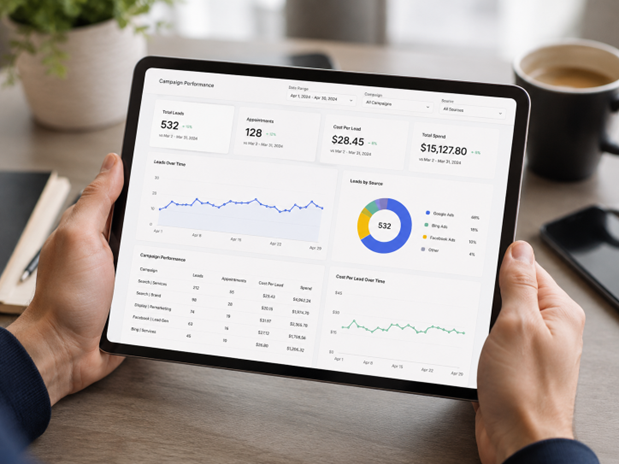
Learn how lead generation services work, what good providers actually do, how appointment setting fits, which channels matter, and how MoreTechGlobal builds connected lead systems that attract, qualify, and convert.
Article Brief
Lead generation services help companies find, attract, qualify, and convert potential customers. The best services do not just hand over a spreadsheet of names. They build a repeatable system around targeting, messaging, outreach, appointment setting, CRM tracking, follow-up, and reporting. That is the difference between “more leads” and a pipeline your sales team can actually work with.
MoreTechGlobal is relevant because its positioning is not only “get attention.” It focuses on AI-powered growth systems that connect CRM, lead tracking, email nurture, automation, AI workflows, reporting, and conversion-focused websites into one measurable system.
Lead Generation Services: The Practical Answer First
Lead generation services help a business attract or reach potential customers, qualify them, and move the right people toward a sales conversation. The useful version is not “give me 1,000 contacts by Friday.” That sounds exciting until your team spends two weeks chasing people who never had the problem, budget, authority, or timing. We have all been there. It is energetic, but not exactly efficient.
The better version is simpler: define the ideal customer, choose the right channels, create a clear offer, qualify interest, book appointments when appropriate, and track every step inside a CRM. In practice, this matters because a lead only has value when your team knows what to do next.
This article focuses on how lead generation services should work for growing companies, especially service businesses, B2B SaaS companies, MSPs, financial firms, healthcare providers, home service companies, and local businesses that need a real pipeline instead of random activity.
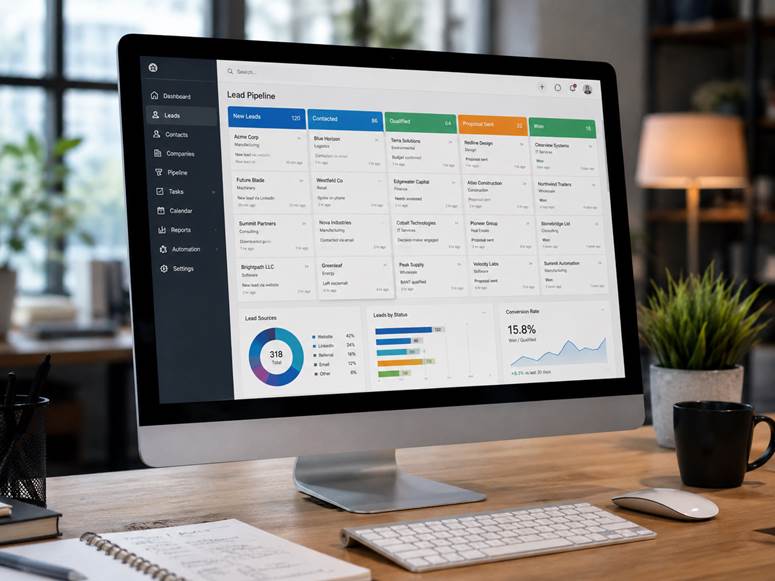
Figure 1. A lead pipeline dashboard helps teams see which prospects are new, contacted, qualified, proposal-ready, and won.
The Problem: Most Lead Generation Fails After the Lead Arrives
Many companies think their lead problem is traffic. Sometimes it is. But often the bigger issue comes after the first click, form submission, call, message, or download. A prospect shows interest, then the business responds slowly, sends the same generic message to everyone, forgets the follow-up, or lets the lead sit in a spreadsheet like it is aging in a wine cellar. Sadly, leads do not improve with age.
This is where many businesses lose readers, buyers, and money. A campaign can generate traffic, but if the CRM and sales automation workflow is weak, the team still misses opportunities. A landing page can collect forms, but without a follow-up system, those leads go cold. A sales rep can make calls, but without reporting, nobody knows which channel is actually producing qualified opportunities.
Modern lead generation services should solve the whole journey: attract, capture, qualify, nurture, route, book, measure, and improve. That is why MoreTechGlobal’s growth systems approach fits naturally: it treats lead generation, CRM, automation, AI workflows, and reporting as connected parts of the same revenue machine.
What Good Lead Generation Services Actually Include
A useful lead generation service is not one tactic. It is a system. The channels may change, but the underlying pieces stay surprisingly consistent.
| Component | What it means | Why it matters |
| Ideal customer profile | Define industry, company size, location, buyer role, pain points, budget range, and trigger events. | Poor targeting makes every channel more expensive. |
| Offer and positioning | Clarify why the prospect should care now, not someday. | Good messaging turns attention into interest. |
| Channel selection | Choose outbound, SEO, PPC, LinkedIn, content, referrals, call center, or partner channels based on intent and market. | Not every channel fits every buyer. |
| Lead qualification | Use criteria such as BANT, intent signals, fit, urgency, and decision-maker involvement. | Quality beats volume when sales capacity is limited. |
| Appointment setting | Book qualified conversations with people who match the offer and understand the next step. | Meetings matter only when they are relevant. |
| CRM and tracking | Record lead source, stage, activity, owner, follow-up, and conversion. | If it is not tracked, it is hard to improve. |
| Reporting and optimisation | Review cost per lead, cost per appointment, conversion rate, show rate, and close rate. | The system gets better when the data is visible. |
According to Leadfeeder’s 2026 comparison of lead generation companies, strong providers are now judged on data quality, ICP fit, integrations, compliance, pricing, scalability, and reputation rather than simple contact volume. That is the right direction. More names do not automatically mean more revenue.
Lead Generation Services vs Appointment Setting: What Is the Difference?
Lead generation is the broader work of creating demand and identifying potential customers. Appointment setting is more specific: it turns qualified prospects into booked sales conversations. The two should work together, but they are not the same thing.
For example, b2b lead generation and appointment setting services might include research, prospect list building, outbound messaging, phone outreach, LinkedIn follow-up, lead qualification, meeting booking, CRM updates, and post-meeting reporting. That is far more useful than “we sent 5,000 emails.” Activity is not the trophy. Revenue movement is.
A company using an outbound lead generation service should ask one honest question: are we paying for activity, leads, meetings, or actual pipeline quality? The answer changes how you judge the service.

Figure 2. Appointment-setting and outbound strategy work best when remote teams track meetings, channel performance, and next steps together.
The Main Types of Lead Generation Services
Lead generation services come in different shapes. The best choice depends on your market, sales cycle, offer, budget, and internal sales capacity.
1. Outbound Lead Generation Services
Outbound lead generation services are useful when your ideal buyers are identifiable and reachable. This often works well for B2B SaaS, managed services, cybersecurity, professional services, consulting, manufacturing, telecom, construction, financial services, and other markets where buyers can be researched by company type, job role, geography, or need.
For an outbound lead generation service for B2B SaaS, the work may include account lists, buyer-persona research, cold email, LinkedIn outreach, call follow-up, CRM notes, and appointment setting. The mistake most people make is sending generic outreach to everyone. A better approach is to segment by pain, use a relevant reason to reach out, and build follow-up that sounds like a human wrote it.
2. PPC Lead Generation Management Services
PPC lead generation management services use paid search, paid social, retargeting, landing pages, and conversion tracking to generate inquiries. This can work well when people already search for urgent needs such as plumbing, HVAC, insurance, financial advisors, pest control, garage door repair, or managed IT services.
The honest part is that PPC can burn money quickly if the landing page, offer, qualification, and CRM tracking are weak. A click is not a lead. A form submission is not a sale. That is why conversion-focused websites and clean funnel tracking matter.
3. SEO Lead Generation Services
SEO lead generation services help companies attract prospects through search-intent content, service pages, local SEO, technical SEO, and conversion paths. This is especially useful for local service businesses, professional services, healthcare, financial firms, MSPs, SaaS, and B2B companies with buyers who research before contacting sales.
SEO is slower than outbound or PPC, but it can become a strong long-term asset. The goal is not to publish endless blog posts. The goal is to answer real buyer questions, create service pages that convert, and connect organic traffic to the sales system. A blog without a follow-up path is like a shop with the lights on and nobody at the counter.
4. LinkedIn Lead Generation Services
A LinkedIn lead generation services company usually helps with profile positioning, prospecting, connection requests, content support, direct messages, and meeting booking. It can work well for B2B services, SaaS, consulting, cybersecurity, managed services, agencies, and professional services.
LinkedIn works best when it feels like relationship-building, not a copy-paste message factory. The goal is to start useful conversations with the right people. The goal is not to make strangers immediately regret accepting your connection request.
5. Lead Generation Call Center Services
Lead generation call center services can support appointment setting, qualification, reminder calls, follow-up, reactivation, and local service campaigns. They are especially relevant for home services, healthcare, financial advisors, insurance, and B2B appointment setting.
Call-based lead generation is strongest when the list is targeted, the script is useful, and the team is trained to qualify rather than push. A good call should feel like help, not a surprise inspection.
6. Lead Generation as a Service
Lead generation as a service usually means a managed, ongoing system where a partner handles strategy, campaigns, data, qualification, appointment setting, CRM updates, reporting, and optimisation. For small teams, this can be useful because hiring, training, managing, and measuring an internal outbound or demand-gen team takes time.
MoreTechGlobal’s model can support this kind of connected system because lead generation funnels, CRM automation, AI workflows, email nurture, and growth reporting can work together instead of living in separate tools.
Industry-Specific Lead Generation: One Message Does Not Fit Everyone
A plumber, an MSP, a financial advisor, a SaaS founder, and a healthcare company do not need the same lead-generation system. The common mistake is treating every market like the same spreadsheet with different labels. Better targeting starts by understanding the buying situation.

Figure 4. Better leads start with a clear ideal customer profile, qualification criteria, and follow-up plan.
Home Services Lead Generation
Home services lead generation covers businesses like plumbing, HVAC, painting, flooring, gutters, pest control, garage doors, moving, tree services, concrete, construction, electrical work, and janitorial services. These buyers often need help quickly, so local SEO, PPC, call tracking, reviews, landing pages, and fast follow-up are critical.
A company may search for plumbing lead generation services, painting lead generation service, flooring lead generation service, gutter lead generation service, tree service lead generation, moving company lead generation services, concrete lead generation service, construction lead generation service, electrician lead generation service, garage door lead generation service, or pest control lead generation services. The services differ, but the core need is the same: urgent intent, local trust, clean booking, and quick response.
MSP and Managed IT Services Lead Generation
MSP lead generation services and managed IT services lead generation need a different approach. The buyer is usually not browsing casually. They may be worried about cybersecurity, downtime, compliance, cloud migration, help desk problems, or aging IT systems.
That is why managed service provider lead generation, managed service provider lead generation agency, managed service provider lead generation company, managed service provider lead generation firm, managed service provider lead generation services, and managed service provider lead generation solutions should focus on trust, pain timing, technical credibility, and qualification. A weak message like “Need IT help?” will not carry much weight. A specific message around cyber risk, cloud cost, compliance, or response time can do better.
The same applies to managed services lead generation agency, managed services lead generation company, managed services lead generation firm, managed services lead generation services, managed services lead generation solutions, managed services lead generation system, and managed network services lead generation. The system has to educate, qualify, and build confidence before the sales conversation.
Financial Services Lead Generation
Financial services lead generation needs extra care because trust is the product before the product. Financial advisors, insurance teams, merchant services providers, lenders, and advisory firms cannot rely on vague promises. Buyers want credibility, clarity, and confidence.
Searches like lead generation for financial services, financial advisor lead generation service, financial advisor lead generation services, lead generation services for financial advisors, lead generation companies financial services, lead generation companies for financial services, financial services lead generation companies, insurance lead generation services, and merchant services lead generation usually signal a need for high-intent prospects and compliant messaging.
A practical system should connect content, paid campaigns, qualification forms, appointment setting, CRM notes, and reporting. It should also avoid overpromising. In financial services, clever copy is less useful than clear positioning and clean trust signals.
Healthcare Lead Generation Services
Healthcare lead generation services and B2B healthcare lead generation services need careful messaging, privacy awareness, and patient or buyer trust. A dental clinic, telehealth provider, medical software company, and healthcare consulting firm may all need leads, but the funnel will not look identical.
For healthcare, the lead-generation system should support clear landing pages, compliant forms where needed, appointment reminders, review signals, CRM routing, and human follow-up. If a campaign makes the buyer feel rushed or confused, it works against trust.
SaaS, Cybersecurity, Telecom, Manufacturing, and Education
SaaS lead generation services, cybersecurity lead generation services, cyber security lead generation services, telecom lead generation services, manufacturing lead generation services, and education lead generation services all require stronger segmentation than broad small-business campaigns.
A SaaS company may need demo requests and trial conversions. A cybersecurity company may need risk-based outreach. A telecom provider may need account-based targeting. A manufacturer may need distributor, procurement, or operations contacts. An education company may need student, parent, or institutional lead flows. Same word: leads. Very different reality.
Local and Regional Lead Generation Services
Location-based searches such as lead generation services Chicago, lead generation services London, lead generation services New Jersey, lead generation service Maryland, lead generation services in Maryland, Denver lead generation services, B2B lead generation services Denver, B2B lead generation services in Denver, Orlando lead generation services, and lead generation services in India show that many buyers want either local market knowledge or cost-effective delivery.
Local context can matter for home services, professional services, healthcare, and real estate. But for B2B SaaS, MSPs, and global service businesses, the stronger filter is usually process quality: ICP research, messaging, CRM hygiene, reporting, and sales alignment.
How to Judge Lead Quality Without Guessing
The goal is not to get the most leads. The goal is to get enough of the right leads at a cost your business can sustain. That is why lead quality should be judged with real criteria, not vibes. Vibes are friendly. They are not a KPI.
| Quality factor | Good sign | Warning sign |
| Fit | Prospect matches industry, size, location, problem, and buyer role. | Prospect only loosely matches a broad list. |
| Intent | They searched, clicked, replied, booked, asked a relevant question, or showed timing. | They were added because their company looked “close enough.” |
| Authority | Decision-maker or strong influencer is involved. | Only a junior contact with no route to decision. |
| Need | There is a clear pain, opportunity, or trigger event. | No visible reason to buy now. |
| Timing | The prospect has a near-term reason to act. | “Maybe someday” becomes the default pipeline stage. |
| Trackability | Source, campaign, stage, owner, and follow-up are recorded. | Nobody knows where the lead came from or what happened next. |
BANT lead generation services use Budget, Authority, Need, and Timeline to qualify prospects. BANT is not perfect, but it is useful when sales teams need structure. The key is not to use it like a rigid interrogation. Use it as a practical checklist to understand whether the conversation should move forward.
What Metrics Should a Lead Generation Service Report?
Good reporting should help you decide what to improve next. A pretty dashboard is nice. A useful dashboard is better.
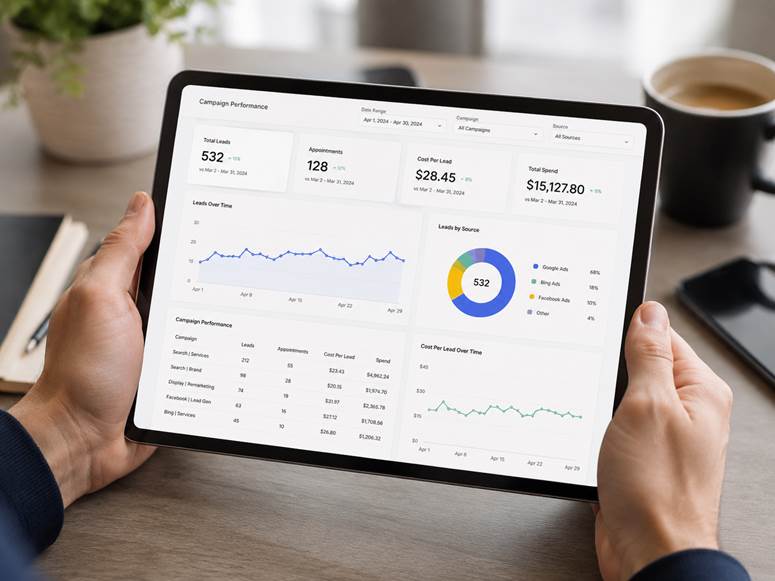
Figure 3. Lead generation becomes easier to manage when cost per lead, appointments, channels, and conversion trends are visible in one reporting view.
| Metric | What it tells you | Why it matters |
| Leads generated | Total contacts or inquiries created by campaign. | Useful, but not enough by itself. |
| Qualified leads | How many leads match your ICP and qualification rules. | Shows whether targeting is working. |
| Appointment rate | How many qualified leads turn into booked calls or meetings. | Shows whether messaging and follow-up are strong. |
| Show rate | How many booked appointments actually happen. | Prevents fake pipeline optimism. |
| Cost per lead | Campaign spend divided by total leads. | Useful only when paired with lead quality. |
| Cost per qualified lead | Spend divided by qualified opportunities. | A better measure than raw CPL. |
| Cost per appointment | Spend divided by meetings booked. | Helpful for appointment-setting programs. |
| Close rate | Percentage of qualified opportunities that become customers. | Connects marketing performance to sales reality. |
| Pipeline value | Potential revenue from qualified opportunities. | Shows whether lead generation is creating business value. |
| Revenue attribution | Revenue tied back to campaign/channel/source. | Helps decide where to invest next. |
Cleverly’s 2026 cost guide notes that B2B lead generation agencies often price by retainer, pay-per-meeting, or hybrid models, while appointment-setting costs can vary widely by meeting type and market. The practical takeaway is not to chase the cheapest lead. It is to understand which pricing model aligns with quality, accountability, and your sales process.
Pricing Models: Retainer, Pay Per Lead, Pay Per Appointment, or Hybrid?
Different lead generation companies price differently. None is automatically best. The right model depends on how much control you need, how qualified the leads must be, and how involved your internal sales team is.
| Pricing model | Best for | Watch out for |
| Monthly retainer | Companies that need strategy, campaign management, testing, reporting, and ongoing improvement. | Make sure deliverables and KPIs are clear. |
| Pay per lead | Businesses with simple qualification rules and high lead volume needs. | Can reward quantity over quality if rules are weak. |
| Pay per appointment | Sales teams that want booked meetings with qualified prospects. | Define what counts as a qualified appointment. |
| Hybrid | Companies that want base service plus performance accountability. | Avoid confusing terms that make reporting messy. |
| Project-based | One-time campaigns, list building, market tests, or launch pushes. | May not include long-term optimisation. |
Performance-based B2B lead generation services with pay-per-lead pricing can be tempting. They can work, especially for clear markets. But you need strict qualification rules, source transparency, and CRM tracking. Otherwise, you may win the lead count and lose the month.
Search terms like best pay-per-lead B2B lead generation services, performance-based B2B lead generation services with pay-per-lead pricing, and most accurate B2B lead generation services 2025 all point to the same buyer concern: companies want accountability. That is reasonable. Just make sure accountability is based on qualified pipeline, not vanity activity.
Multichannel Lead Generation: The Best Channel Is Usually Not One Channel
Multichannel lead generation services combine several channels so the buyer sees a relevant message in more than one place. That might include SEO, PPC, LinkedIn, email, retargeting, webinars, content, outbound calls, referral campaigns, and CRM nurture.
Leadinfo’s 2026 trend coverage points to tools such as website visitor identification, CRM and marketing automation, LinkedIn prospecting, Google Ads, and LinkedIn Ads as important B2B channels. The lesson is practical: strong lead generation is becoming more connected, more data-aware, and more dependent on clean handoffs between marketing and sales.
For a growth-focused company, MoreTechGlobal’s lead generation funnels can connect with CRM systems, marketing automation, AI agents and workflows, reporting and analytics, and conversion-focused websites. That combination matters because the buyer rarely moves from stranger to customer in one neat step.
The Role of AI and Generative Search in Lead Generation
AI is changing lead generation, but not in the magical way many sales pages suggest. AI can help with research, segmentation, first-draft messaging, lead scoring, routing, response suggestions, call summaries, and follow-up timing. It does not remove the need to understand the buyer.
Some companies now search for leading generative search optimization service, leading generative engine optimization services for AI products, and leading generative engine optimization services in AI industry because they want their brand to appear in AI-assisted search and answer engines, not only traditional Google results.
This is a useful new layer, especially for AI products, SaaS, consulting, and B2B services. But the basics still matter: clear positioning, helpful content, trusted pages, clean technical SEO, useful service pages, and a follow-up system that does not collapse after the lead arrives.
The phrase leading AI generative expand service may sound awkward, but it reflects a real shift: buyers are using AI tools to research options. Businesses need content and systems that answer buyer questions clearly wherever the search happens.
Common Lead Generation Mistakes
A lot of lead generation fails for boring reasons. That is annoying, but also good news, because boring problems are fixable.
Mistake 1: Buying Leads Without a Follow-Up System
Buying or generating leads before building a follow-up process is brave. Usually not wise, but definitely brave. If the team does not respond quickly, segment properly, and track every step, the campaign wastes money.
A better approach is to connect campaigns to CRM pipeline clarity, email nurture, sales task reminders, and reporting. That is also the core idea behind MoreTechGlobal’s article on why leads go cold.
Mistake 2: Treating Every Industry the Same
Lead generation for managed service providers is not the same as lead generation for home services. Healthcare lead generation services are not the same as plumbing lead generation services. Financial advisor lead generation services are not the same as SaaS lead generation services.
The message, trust signals, landing page, qualification questions, and sales handoff should match the market. Generic campaigns create generic results.
Mistake 3: Measuring Only Cost Per Lead
Cost per lead matters, but it can mislead you. Cheap leads that never convert are expensive in disguise. A better dashboard looks at cost per qualified lead, cost per appointment, show rate, close rate, and pipeline value.
Mistake 4: Letting Sales and Marketing Work Separately
Lead generation works better when marketing and sales share definitions. What counts as qualified? When should sales call? What happens after no reply? What makes a meeting valid? Without those answers, teams blame each other and the pipeline gets messy.
This is why CRM vs marketing automation matters. CRM holds the relationship and pipeline. Automation keeps the right actions moving. You need both working together.
Mistake 5: Using AI Without Guardrails
AI can help, but it can also produce outreach that sounds polished and empty. The goal is not to sound clever. The goal is to be useful. Use AI to support research, relevance, routing, summaries, and follow-up. Do not use it to spam people faster.
Why MoreTechGlobal Fits Lead Generation Services
MoreTechGlobal fits this topic because lead generation is not only a marketing problem. It is a systems problem. A company can attract attention and still lose money if the website does not convert, the CRM is messy, the follow-up is weak, and reporting is unclear.
MoreTechGlobal services cover the practical pieces that make lead generation work: B2B growth systems, custom web development, conversion-focused websites, CRM and sales automation, AI and automation systems, business process automation, lead generation funnels, reporting and analytics, performance optimisation, tech consulting and digital strategy, and dedicated development teams.
For startups, SMEs, service businesses, SaaS companies, hospitality, education, logistics, retailers, MSPs, healthcare teams, and growth-focused companies, the practical benefit is a connected system. The website captures the right lead. The CRM stores the right data. Automation follows up. Sales sees the next task. Reporting shows what worked. Your future self will thank you.
This is also why the existing MoreTechGlobal article on building a B2B lead generation machine pairs well with this guide. That article explains the wider growth-system idea. This article focuses more specifically on lead generation services, appointment setting, industry use cases, pricing, and lead quality.

Figure 5. A clean CRM pipeline turns lead generation from random activity into a measurable sales system.
A Practical Lead Generation System MoreTechGlobal Could Build
Here is what a realistic system could look like for a service business or B2B company.
| Stage | System element | Practical outcome |
| 1. Attract | SEO pages, paid ads, LinkedIn outreach, outbound email, referral campaigns, local search, or content. | The right people discover the offer. |
| 2. Capture | Landing pages, website forms, booking links, call tracking, chat, or downloadable guides. | The lead enters the system cleanly. |
| 3. Qualify | ICP rules, BANT questions, lead scoring, source tracking, AI-assisted routing, or call qualification. | Sales spends time on better-fit prospects. |
| 4. Nurture | Email sequences, retargeting, CRM reminders, educational content, and follow-up automation. | Interested prospects do not disappear after one touch. |
| 5. Convert | Appointment setting, sales calls, proposal workflows, quote requests, and CRM stages. | The team can move the opportunity forward. |
| 6. Measure | Dashboards for CPL, CPA, source, channel, appointment rate, show rate, close rate, and revenue. | The company knows where to invest next. |
A simple fix is to stop treating lead generation as a campaign only. Treat it as a revenue workflow. That is where MoreTechGlobal’s automation guide, connected digital growth system thinking, and business management software perspective become useful beyond their original topics.
Lead Generation Services Checklist Before You Hire Anyone
Before hiring a lead generation company, agency, call center, or appointment-setting partner, ask these questions.
- Do they clearly define your ideal customer profile before outreach starts?
- Do they explain how leads are sourced, verified, and qualified?
- Do they offer B2B appointment setting services only, or also strategy, campaign management, CRM updates, and reporting?
- Do they connect work to your CRM or simply send spreadsheets?
- Do they track qualified leads, appointments, show rate, cost per appointment, and pipeline value?
- Do they understand your industry, such as MSP, healthcare, financial services, home services, construction, SaaS, telecom, or manufacturing?
- Do they write outreach that sounds human and relevant?
- Do they have a clear follow-up process for no reply, not ready, and future interest?
- Do they report what is working and what needs to change?
- Do they help improve the system, not just run the same campaign every month?
FAQ
What are lead generation services?
Lead generation services help businesses attract, identify, qualify, and convert potential customers using channels such as SEO, PPC, outbound outreach, LinkedIn, appointment setting, call centers, landing pages, CRM automation, and follow-up systems.
What is the difference between lead generation and appointment setting?
Lead generation creates and qualifies potential customer interest. Appointment setting turns qualified prospects into booked sales conversations. Appointment setting is usually one part of a wider lead generation system.
Are outbound lead generation services still useful?
Yes, outbound lead generation services can be useful when the ideal customer is clearly defined, the message is relevant, and the follow-up process is strong. Poor targeting and generic outreach are the usual reasons outbound fails.
What are the best lead generation services for service businesses?
For service businesses, the best mix often includes local SEO, PPC, landing pages, review signals, call tracking, fast follow-up, CRM automation, and appointment setting. The exact mix depends on the service, location, urgency, and buyer behavior.
How do MSP lead generation services work?
MSP lead generation services usually focus on identifying companies with IT, cybersecurity, cloud, compliance, help desk, or infrastructure needs. They may use outbound outreach, LinkedIn, content, paid campaigns, webinars, and appointment setting.
Do financial services lead generation campaigns need special care?
Yes. Financial services lead generation depends heavily on trust, compliance-aware messaging, clear qualification, and careful follow-up. The lead generation system should avoid exaggerated claims and should support credibility from the first touch.
What should I track in a lead generation campaign?
Track leads generated, qualified leads, cost per lead, cost per qualified lead, appointments booked, show rate, close rate, pipeline value, revenue attribution, and source performance.
Is pay-per-lead better than a monthly retainer?
Not always. Pay-per-lead can work if qualification rules are strict. A retainer may be better when you need strategy, campaign testing, CRM integration, reporting, content, and ongoing optimisation.
Can AI improve lead generation services?
Yes. AI can support research, segmentation, lead scoring, routing, email drafts, call summaries, follow-up suggestions, and reporting. It should support a clear strategy, not replace it.
Why choose MoreTechGlobal for lead generation services?
MoreTechGlobal is a practical fit when a company needs more than leads. Its services connect lead generation funnels, CRM automation, AI workflows, conversion-focused websites, reporting, analytics, and growth tracking into one system.
Conclusion: Good Lead Generation Is a System, Not a Contact List
Lead generation services work best when they help your business build a repeatable pipeline, not when they simply increase the number of names in your CRM. More leads are useful only when they are the right leads, properly qualified, followed up, tracked, and connected to the sales process.
The practical path is clear: define your ideal customer, choose the right channels, build a strong offer, qualify leads properly, connect the CRM, automate follow-up, measure performance, and keep improving. You do not need to overcomplicate this. You just need the pieces working together.
If your business needs a connected lead generation system, MoreTechGlobal’s services are a practical next step. The team can help connect lead generation funnels, CRM and sales automation, AI workflows, conversion-focused websites, reporting and optimisation, and custom software support so your pipeline becomes easier to manage and easier to scale.
For more practical ideas on lead generation, automation, CRM, websites, and growth systems, explore the MoreTechGlobal blog.
Recommended MoreTechGlobal Reads
- Why Leads Go Cold: The Follow-Up System Most Growing Companies Forget to Build
- Why Swedish Sustainable Brands Need a Connected Digital Growth System
- Business Management Software for Natural Brands: Why Sustainable Businesses Need More Than a Website
- Growth Systems: How to Build a B2B Lead Generation Machine That Actually Converts
- CRM vs Marketing Automation: Build the Workflow That Turns Leads Into Customers
- Automated Business: How Small Businesses Can Work Smarter, Cut Costs, and Grow Without Adding Chaos
Sources Used
People Also Read

4 juni 2026
IT Outsourcing for Small Businesses: How to Build Reliable Support and Development Capacity Without Hiring Too Fast
Article Brief IT outsourcing helps small businesses access technical support, help desk operations,...
Read article
3 juni 2026
Custom Software vs SaaS in 2026: When to Build, Buy, or Blend Both
Article Brief This article helps readers decide whether they should buy SaaS, build custom so...
Read article
2 juni 2026
Business Process Automation Consulting: How to Fix Repetitive Work Before It Slows Down Your Growth
Article Brief Business process automation consulting helps companies identify repetitive tasks, impr...
Read article